
2026 Autumn Drive
2026 Kansai Autumn Leaves by Campervan: A 5-Day Route from Osaka
Kansai's autumn colour takes a month to come down from the mountains to the city, from Odaigahara in late October to Arashiyama in late November. Instead of booking a chain of hotels, follow the peak in a DREAMAX campervan: walk an empty temple approach at first light, and move on to the next roadside station before the evening traffic builds. This is a 5-day, 4-night loop from Osaka, with a named overnight stop, food and one practical tip for each day. Every peak window here is a typical-year guide; check the forecasts before you go.
·
By Gary, campervan & car-camping advisor at DREAMAX
Colour report (updated weekly)
This section is updated every week through the end of November. For each of the six spots on this route it gives the colour right now, in four stages (green, turning, peak, past peak), with the date it was assessed. The calendar below is the typical year; this is the live reading for 2026.
As of 25 September 2026, all six are still green, and no turning has been reported yet. First to change is Odaigahara at about 1,600 m, where colour typically starts in early October, followed by Koyasan from mid-October. Yoshino usually begins in late October, while the Koto Sanzan, Minoo and Arashiyama do not start turning until November. For changes between weekly updates, the daily-updated peak forecast is linked below.
- Odaigahara — as of 2026-09-25: green (colour typically starts early October)
- Koyasan — as of 2026-09-25: green (colour typically starts mid-October)
- Yoshino — as of 2026-09-25: green (colour typically starts late October)
- Koto Sanzan — as of 2026-09-25: green (colour typically starts early November)
- Minoo Park — as of 2026-09-25: green (colour typically starts early to mid-November)
- Arashiyama — as of 2026-09-25: green (colour typically starts early November)
Typical peak windows, and the best departure date for this route
Kansai's autumn-colour spots peak at different times depending on altitude and latitude. In a typical year: Odaigahara (on the Nara–Mie border at about 1,600 m) in late October; Koyasan late October to early November; Yoshino mid-November; the Koto Sanzan temples in Shiga mid-November; Minoo mid to late November; and Arashiyama late November. Each can shift a week either way, so the safe approach is to check the colour reports a week before departure and finalise the order then.
This itinerary assumes a mid-November start: the tail of the Koyasan peak, Yoshino and the Koto Sanzan at their height, and Arashiyama and Minoo just turning. If you leave in late October, swap Day 2 for Odaigahara; the alternative is written into Day 2 below.
Every overnight stop is an established roadside station (michi-no-eki) with 24-hour toilets where resting and sleeping in the vehicle is permitted. No set-up outside and no fires at roadside stations. Every few days, add an RV park or an onsen stop to take on water, bathe and recharge.
If you only have three days, DREAMAX also publishes a 3-day autumn-leaves route that runs Minoo → Arashiyama and Ohara → Koto Sanzan → Yoshino, with its distance and driving time and the roadside station for the night. Use it as a ready-made draft when you need to compress the trip.
- Odaigahara: late October (the Odaigahara Driveway closes for winter from late November to late April)
- Koyasan: late October to early November
- Yoshino: mid-November
- Koto Sanzan (Saimyo-ji, Kongorin-ji, Hyakusai-ji): mid-November
- Minoo Park: mid to late November
- Arashiyama: late November
Day 1: Osaka → Kudoyama → Koyasan
Collect the van in Osaka city or at Kansai Airport and take the Hanwa and Keinawa expressways to Kudoyama in Wakayama, about an hour and a half. From Kudoyama, Routes 370 and 480 climb to Koyasan in about 50 minutes. Treasure 1 (2.8 m tall) manages the climb without trouble, but tour coaches come the other way, so take the bends gently.
At Koyasan the Okunoin approach is the main event. Colour among the cedars is limited to a few spots, but the area around the Konpon Daito pagoda in the Danjo Garan and the Banryutei garden at Kongobu-ji photograph beautifully. Use the town-run car parks at the Danjo Garan or in front of Kongobu-ji; large bays are limited, so arrive in the morning.
Descend in the evening and sleep at Michi-no-eki Kaki no Sato Kudoyama, at the foot of Koyasan in the town associated with the Sanada clan. It has 24-hour toilets and a farmers' market that fills with the local Fuyu persimmons in autumn. Eat a shojin-ryori (temple vegetarian) lunch on the mountain, with the sesame tofu, and keep dinner light with persimmons and bread from the station.
- Practical tip: the Koyasan town car parks fill in the late afternoon. Visit first thing in the morning or after 3 pm.
Day 2: Kudoyama → Yoshino (or Odaigahara in late October)
From Kudoyama, the Keinawa expressway and Route 169 reach the foot of Mt. Yoshino in about an hour and a half. Yoshino is famous for cherry blossom, but its mid-November colour is superb and draws a fraction of the spring crowds. Leave the van at the Shimo-senbon car park, walk up to the Zao-do hall of Kinpusen-ji, and continue to Yoshimizu Shrine in Naka-senbon if you have the legs. The area around the ropeway and the approach to Nyoirin-ji are the colour highlights.
If you set off in late October, make this the Odaigahara day instead. Head south on Route 169 from Yoshino and up the Odaigahara Driveway to the summit car park, about two hours. At roughly 1,600 m, the standing dead trees of Masaki Pass and the red of the shiroyashio azaleas spread out in front of you. The Driveway closes for winter from late November, so do not force it into a mid-November plan. Mornings can drop below freezing up there, and under the DREAMAX rental terms the fresh-water tank must be drained before the van goes anywhere sub-zero.
Sleep at Michi-no-eki Sugi no Yu Kawakami in Kawakami village, on Route 169, with the Sugi no Yu onsen attached and a rest area that smells of Yoshino cedar. Lunch is kakinoha-zushi (persimmon-leaf sushi) and kuzu mochi in Yoshino; dinner is at the station restaurant after the bath, or cooked in the van from what you brought.
- Practical tip: the road up Mt. Yoshino is narrow and traffic controls apply on November weekends. Park at Shimo-senbon and walk.
Day 3: Kawakami → Nara → Hari Terrace
North on Route 169 to Nara city, about an hour and a half. In Nara Park, the best colour is on the path climbing behind Todai-ji to Nigatsu-do, along the approach to Kasuga Taisha, and around the Ukimido pavilion. Deer among the ginkgo trees are a mid to late November sight. Parking for larger vehicles near the park is limited, so use the prefectural large-vehicle car park or park a little further out and walk.
Lunch on Higashimuki shopping street (Miwa somen noodles, or compare kakinoha-zushi from different shops), walk the old townhouses of Naramachi, then drive the Meihan road in the evening to Michi-no-eki Hari Terrace in Hari, Nara. It is one of the largest roadside stations on the Meihan road, with a 24-hour convenience store, an onsen facility and a big car park. Tomorrow heads for Shiga, so turn in early.
This is a short-mileage day, which makes it a good one for using the electrics in Treasure 1 or Happy 1 Turbo freely. The solar panel charges the 400Ah battery through the day, so lights and the microwave in the evening are no cause for worry.
- Practical tip: the deer in Nara Park react to any bag that might hold food. Do not leave your roadside-station persimmons outside the van.
Day 4: Hari Terrace → Koto Sanzan → Higashiomi
From the Meihan road, the Shin-Meishin and Meishin expressways reach the Koto area of Shiga in about an hour and a half. The Koto Sanzan are three Tendai temples, Saimyo-ji, Kongorin-ji and Hyakusai-ji, all celebrated for autumn colour and all peaking in mid-November. Each has a large car park, so a campervan is no problem. All three in one day is perfectly doable, but Kongorin-ji's so-called blood-stained maples and the approach to Saimyo-ji deserve unhurried time.
With time to spare, add Eigen-ji, built along the Echi River gorge. It is quieter than the Koto Sanzan, and the low evening light through the maples is the moment to be there. Food is Omi beef: yakiniku or a steak rice bowl at lunch in Yokaichi or Higashiomi.
Sleep at Michi-no-eki Aito Margaret Station in Higashiomi, on Route 307, with a farm produce market and a large car park. Tomorrow starts very early for Arashiyama, so get to bed in good time.
- Practical tip: the Koto Sanzan open overflow car parks and jam up on November weekends. Being inside Saimyo-ji before 9 am, right after opening, is the quiet way to see it.
Day 5: Higashiomi → Arashiyama → Minoo → Osaka
The last day is all about getting up early. From Higashiomi, the Meishin expressway reaches Arashiyama in Kyoto in about an hour and a quarter. Around Togetsukyo bridge in late November, midday is barely walkable; at seven in the morning the bamboo grove and the bridge are another world. Taking a campervan into central Arashiyama is not recommended. The streets are narrow, the car parks are designed for cars, and Treasure 1's 2.8 m height will not fit most multi-storey car parks. Either park at a surface car park a little way out and walk, or secure a surface bay near Tenryu-ji very early.
Leave Arashiyama before noon and take the Meishin and Shin-Meishin to Minoo in Osaka Prefecture, about an hour. Minoo Park is a 3 km walking path from Hankyu Minoo station to Minoo Falls, at its best from mid to late November. Cars cannot enter the falls path, so park near the station or at the car park above the falls and walk. The local speciality, deep-fried maple leaves, is sold freshly made along the path.
Return the van in Osaka city or at Kansai Airport in the evening; handover at both is free. The five days cover about 400–450 km, and expressway tolls come to roughly ¥6,000–8,000 (the ETC card is lent free and settled at return).
- Practical tip: Arashiyama at dawn, Minoo in the afternoon. Reverse the order and you will sit in traffic at both.
Crowds and parking: think in terms of your van size
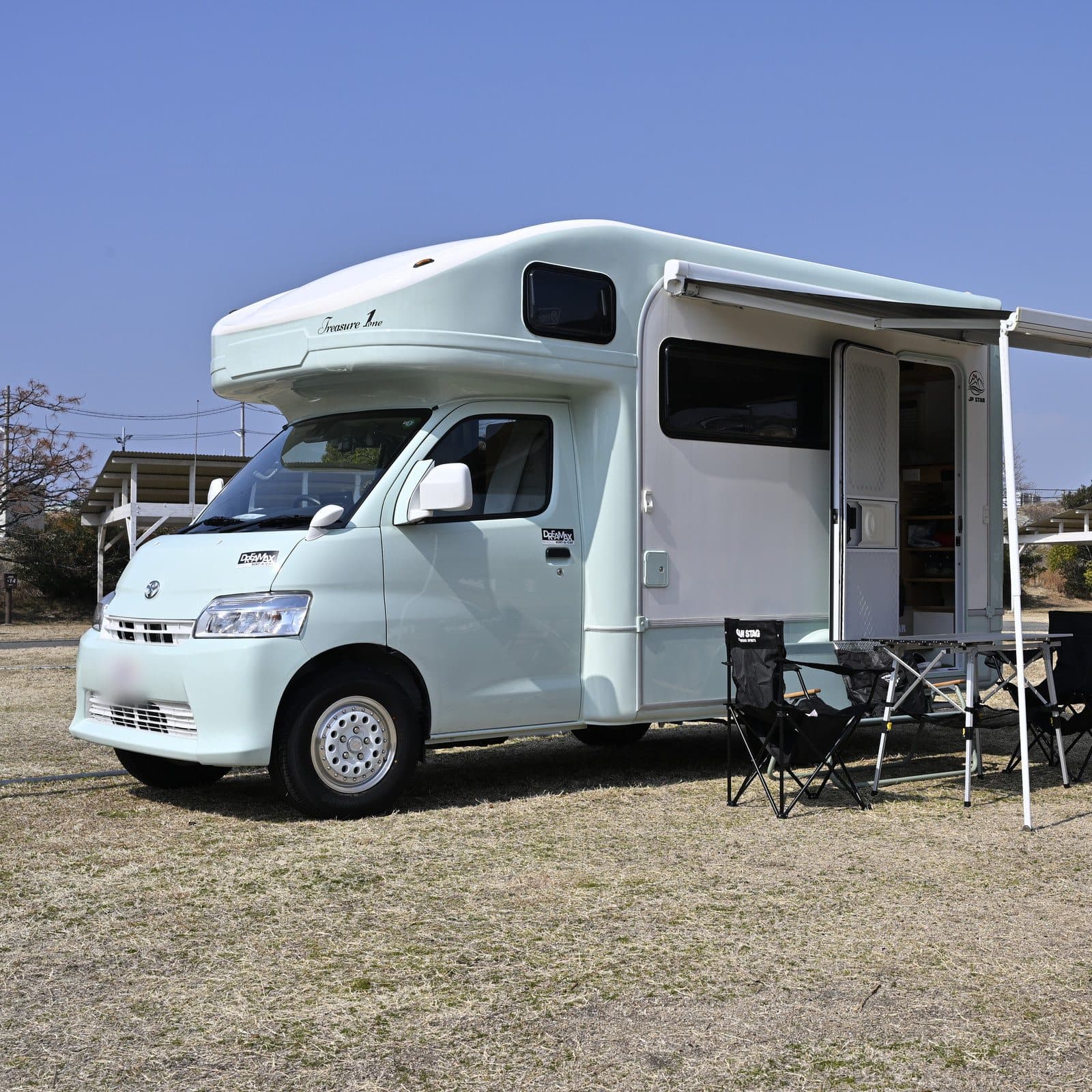
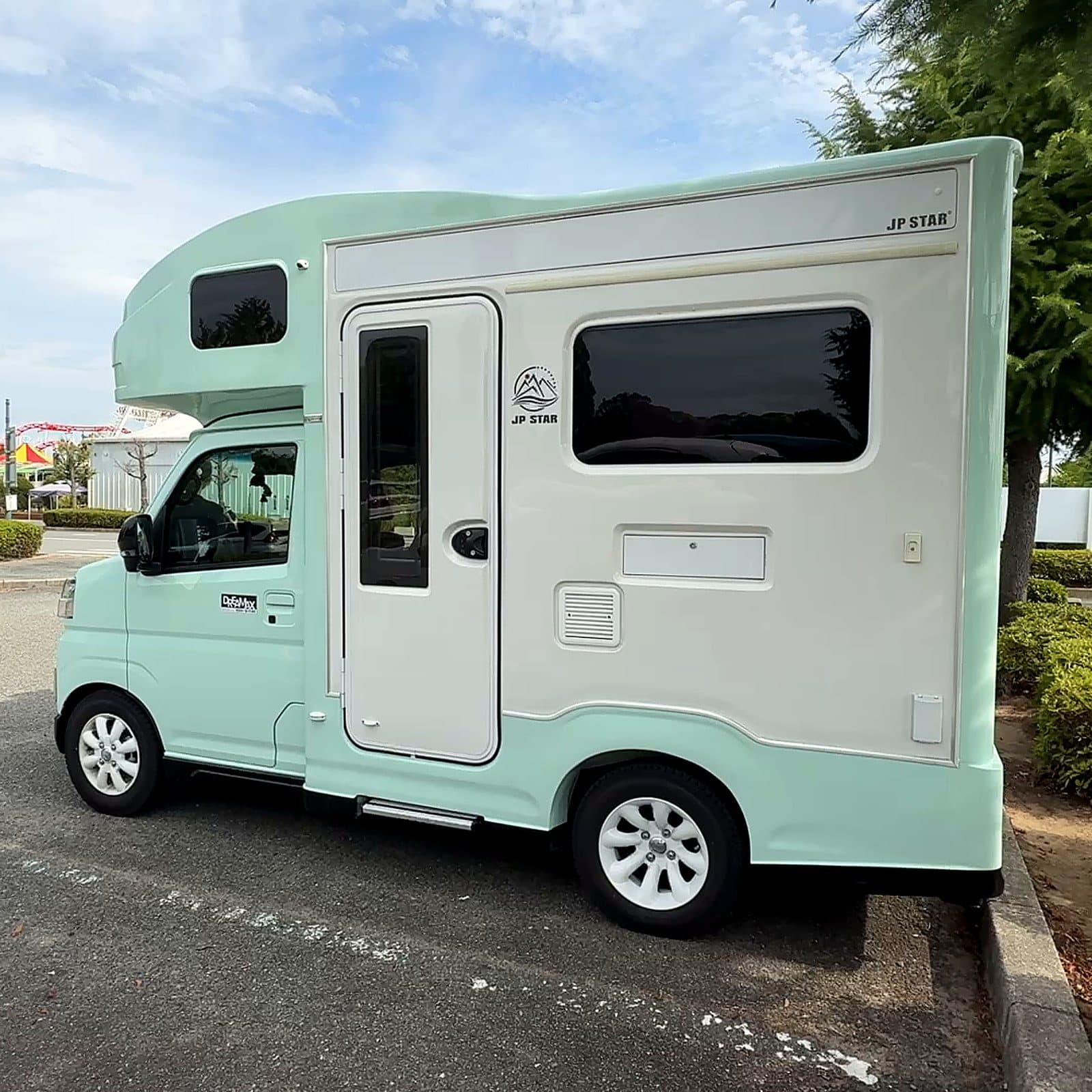
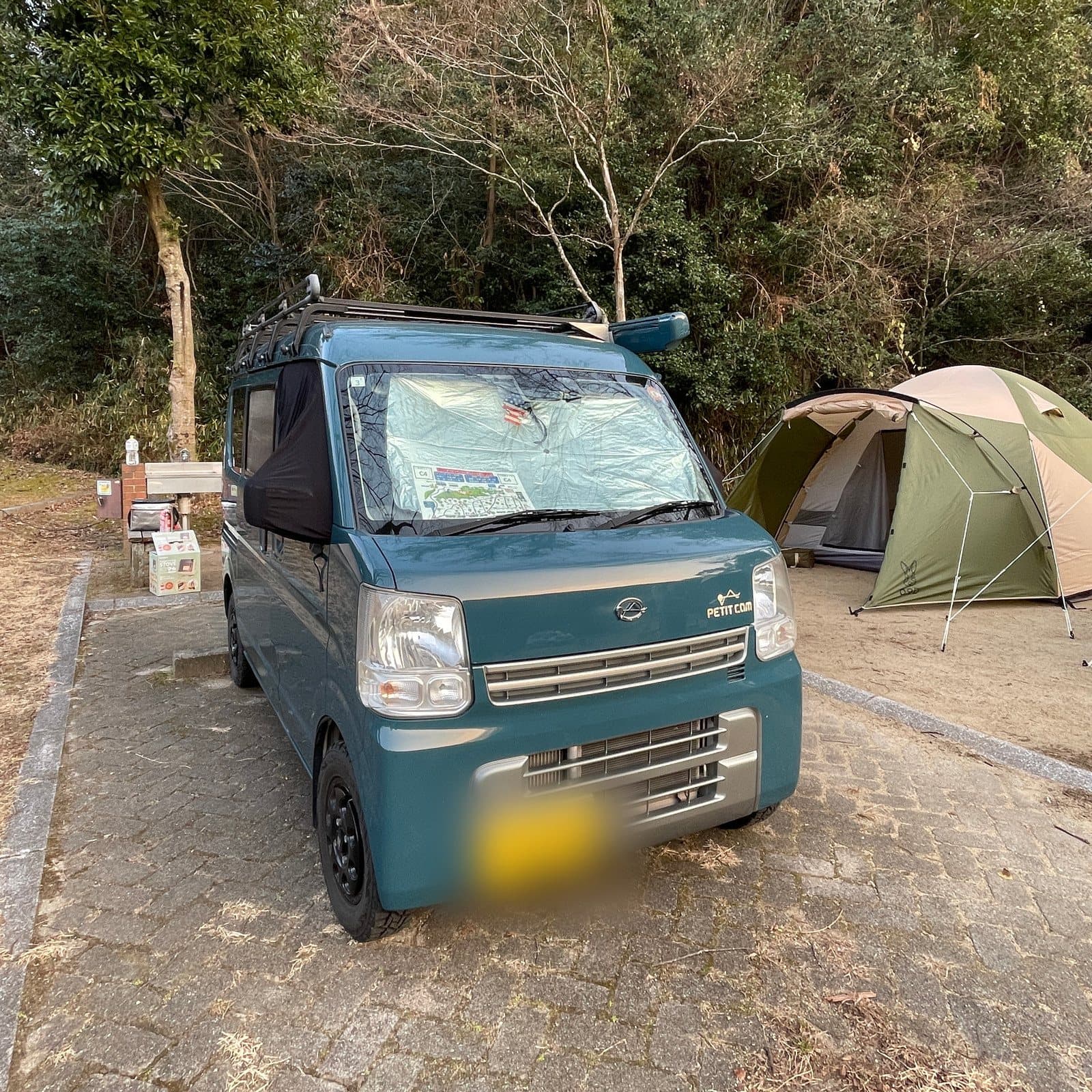
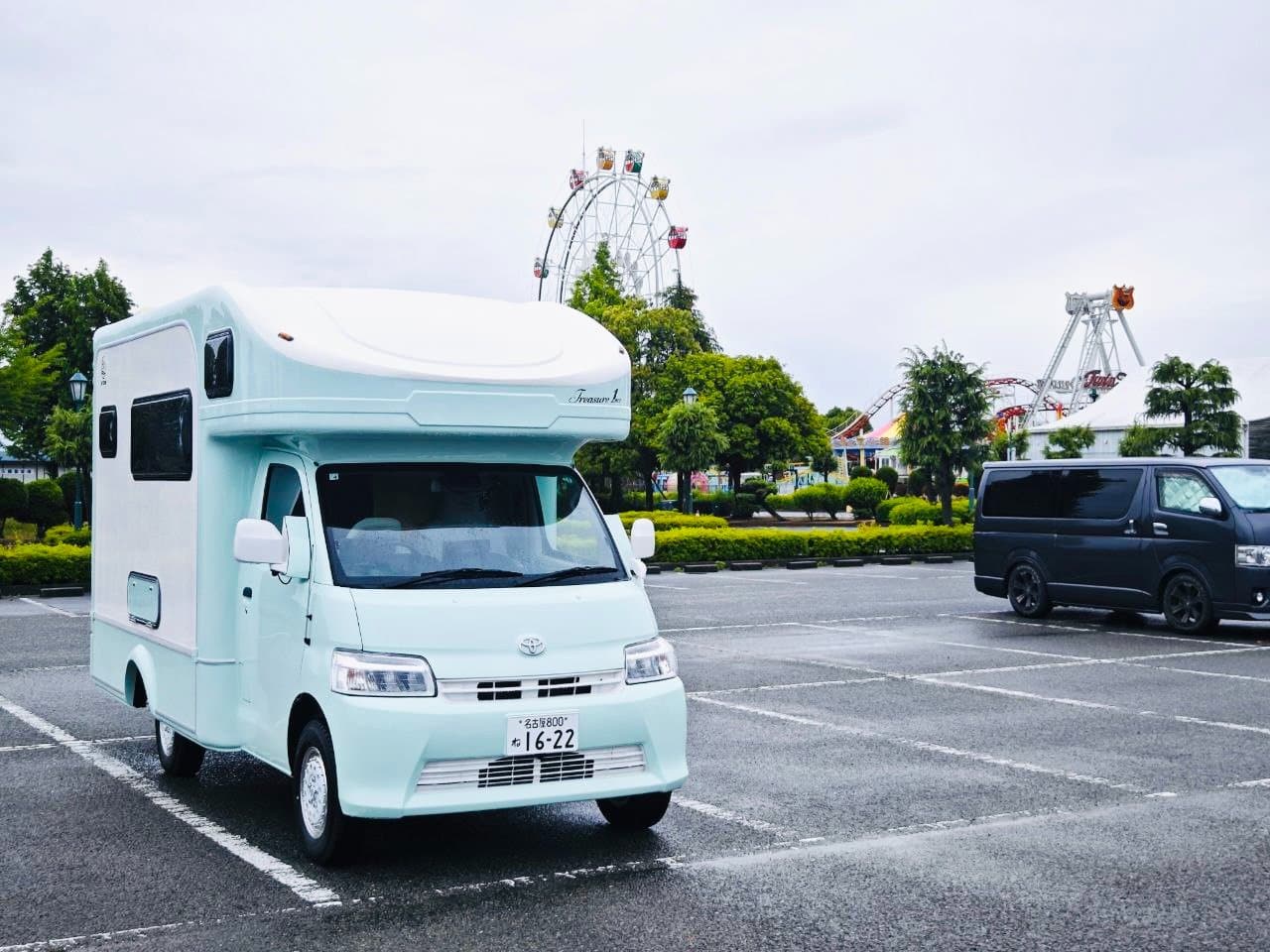
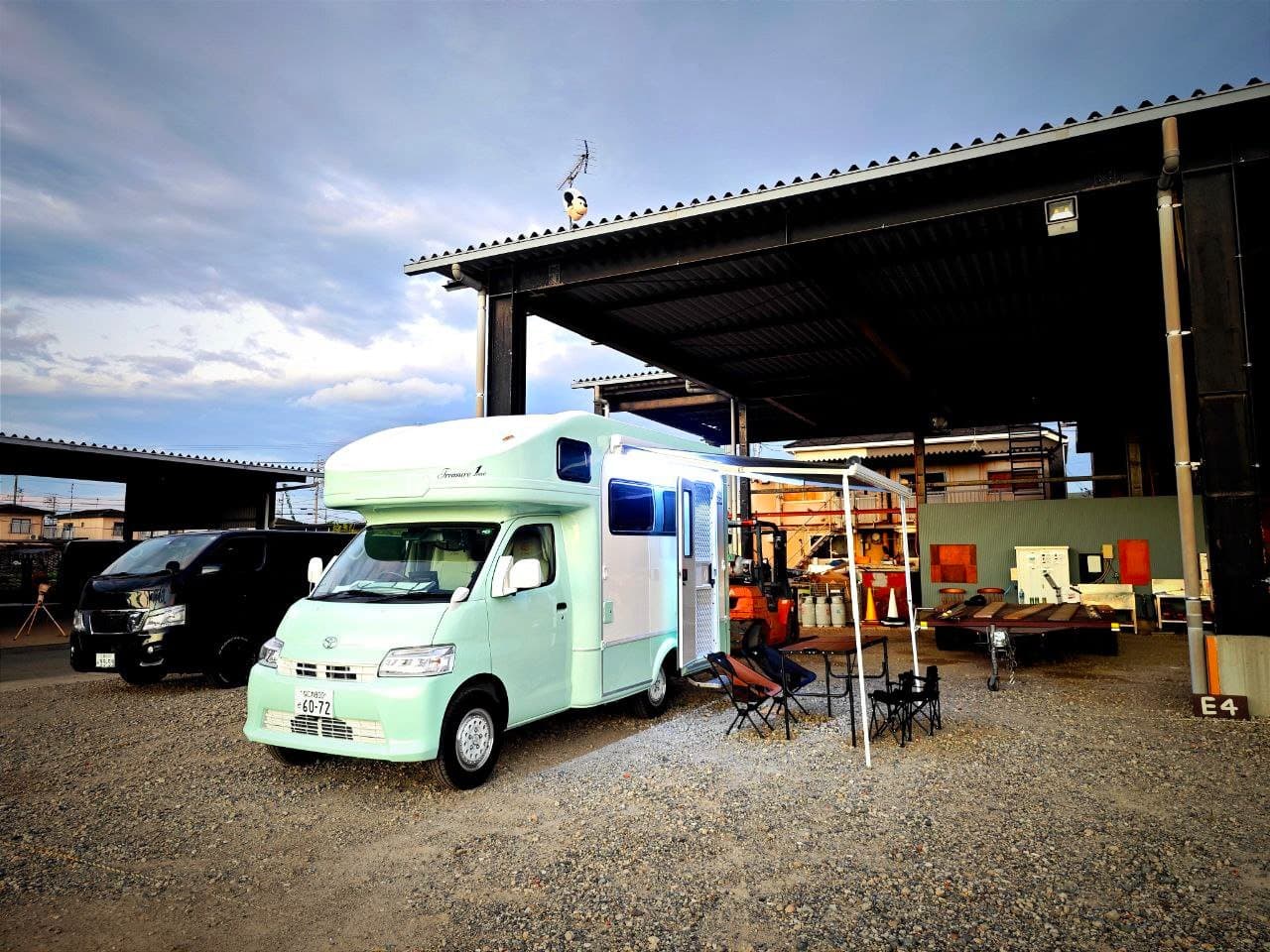
The enemy in autumn Kansai is traffic and parking, and the tactics depend on the size of your van. Petit-Cam Villa (3.4 m long, 2.0 m tall) is a kei-class vehicle and fits ordinary car parks in Arashiyama and Nara. Happy 1 Turbo (3.9 m long, 2.6 m tall) also fits a kei bay, but avoid multi-storey car parks with height limits. Treasure 1 (4.9 m long, 2.8 m tall) should be planned on the assumption that multi-storey car parks are out; choose surface car parks or tourist car parks with large-vehicle bays.
Traffic controls in Arashiyama tighten every year. On November weekends, surrounding streets can become one-way or closed to entry, and driving towards the centre after 8 am means going nowhere. Arrive at dawn, park, and leave before noon: that is the only method that works.
Koyasan and Yoshino both have car parks part-way up mountain roads, and at peak times attendants divert arrivals to more distant ones. Getting in first thing solves both. The Koto Sanzan have generous parking and are the least stressful of the lot.
On the road, help is available in four languages (Japanese, English, Cantonese and Mandarin) on WhatsApp and LINE, 08:00–20:00 Japan time every day. If you pull into a roadside station at 7 pm and find it full, message DREAMAX there and then: we search our database of 3,990+ overnight-capable stops (as of September 2026) for the nearest alternative and send it to you. Support closes at 20:00, so settle the night's stop while it is still light.
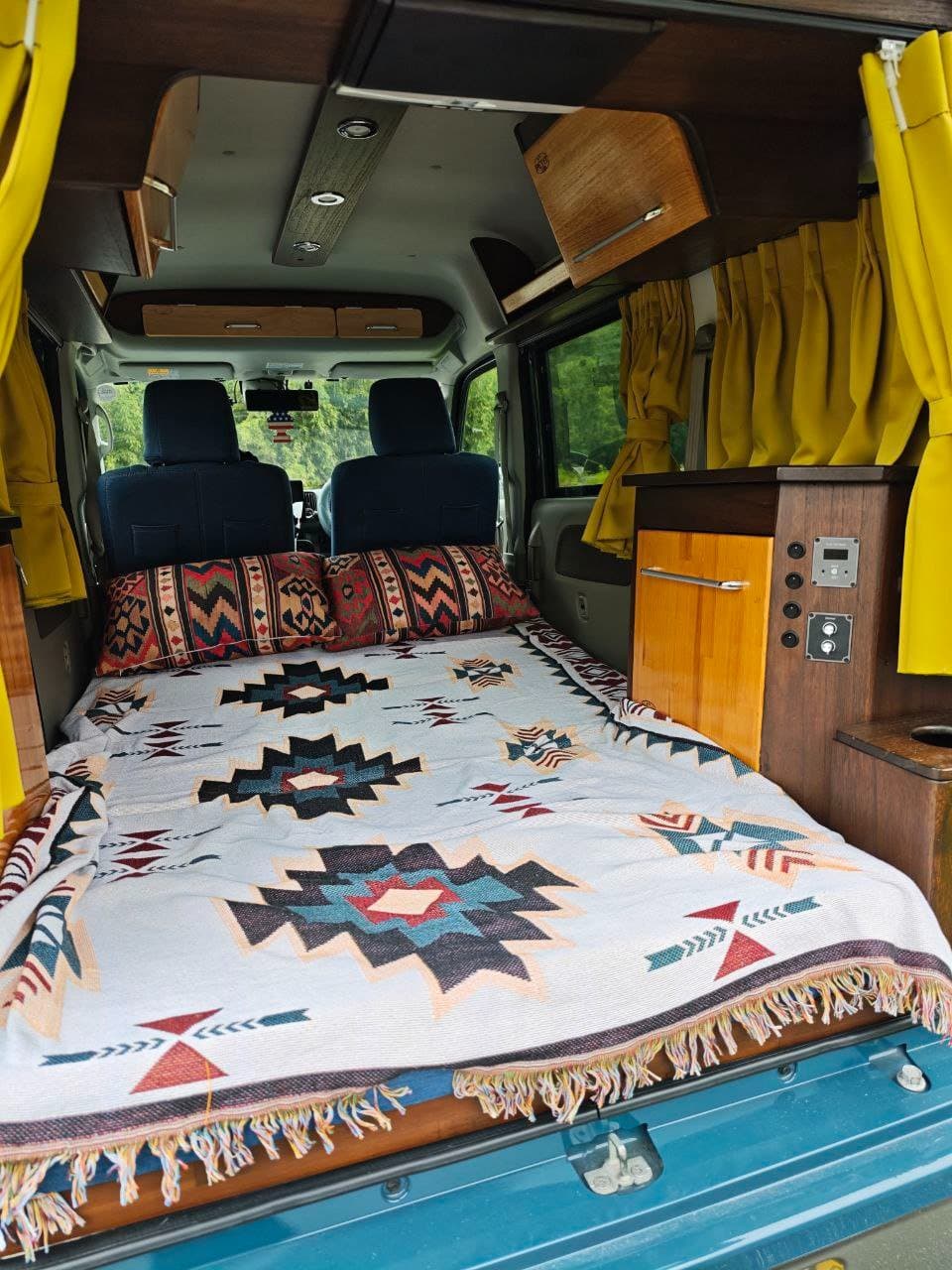
- Petit-Cam Villa: 3,395 mm long, 2,000 mm tall. Parks almost anywhere.
- Happy 1 Turbo: 3,880 mm long, 2,600 mm tall. No multi-storey car parks; a surface kei bay is fine.
- Treasure 1: 4,900 mm long, 2,800 mm tall. Surface car parks with large-vehicle bays only.
Why a camper beats a hotel for autumn leaves
A famous autumn spot is a different place at 7 am and at noon. From a hotel you have breakfast and check-out before you move, and you arrive at the same time as the coaches. In a campervan you move to a roadside station near the site the evening before and walk the approach as the sun comes up. See it before the crowds, then move on at midday. That time gap is what decides an autumn trip.
The second advantage is flexibility. Peak colour shifts a week either way from year to year. A hotel booked six months ago cannot move; in a camper, the day you hear that Arashiyama is early this year, you swap the order. November is also the most expensive month for Kansai hotels, and for a party of four, the hotel money saved covers most of the vehicle cost on its own.
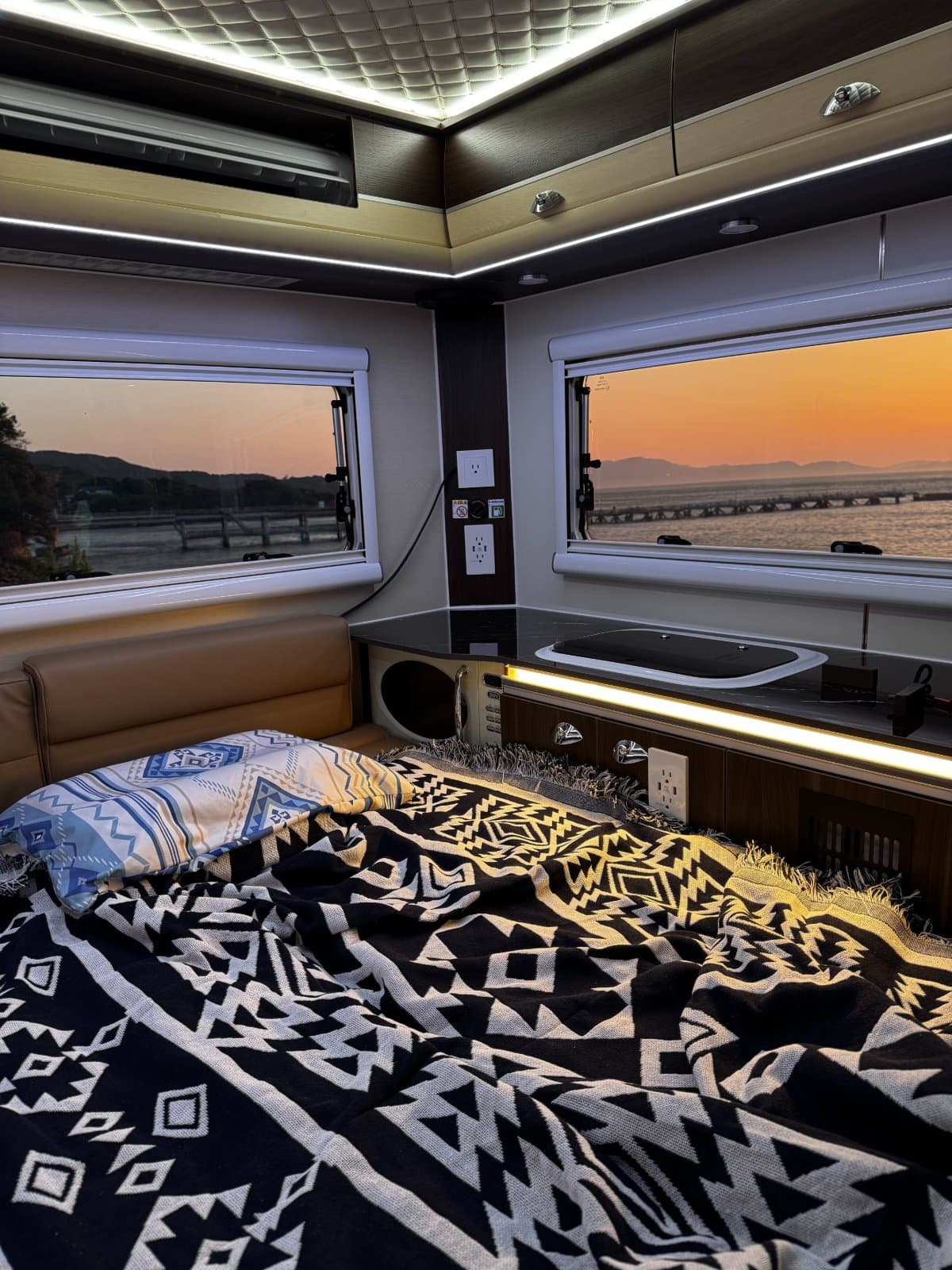
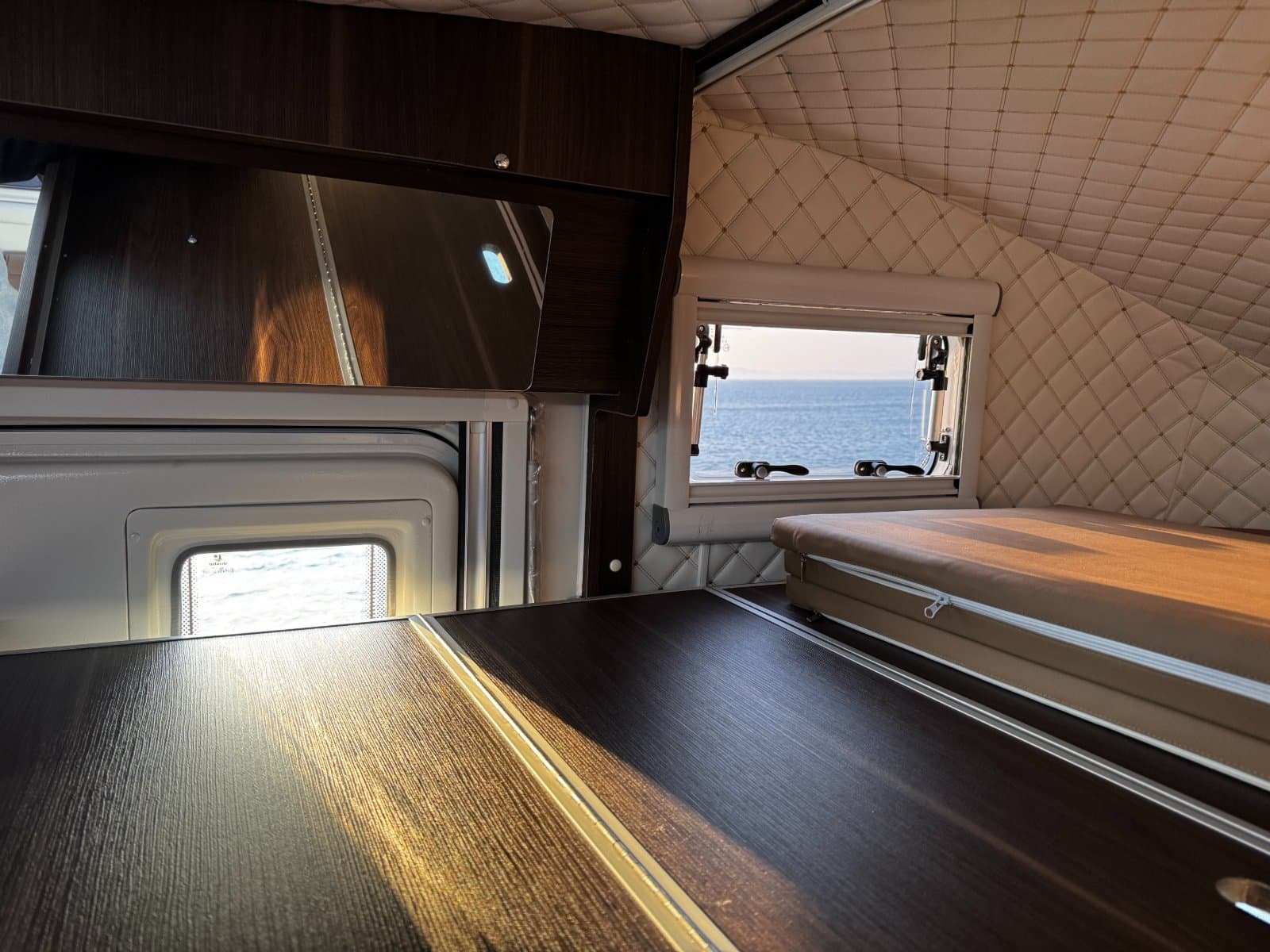
Comfort inside is more than adequate in November. Treasure 1 has an FF heater (fuel-fired) plus electric household air-con heating, and Happy 1 Turbo an FF heater (fuel-fired) plus floor heating: two heating systems in each. The FF heater works without shore power, and the 400Ah battery runs the air-con and the floor heating through the night. Petit-Cam Villa lists no vehicle-side heating, so pair it with the rentable Coleman sleeping bag (rated to -5°C with all three layers). Kansai mornings in November can dip to around 5°C.
Rough costs and the right van for this trip
Using the weekday rates (excluding tax) on the vehicle pages: Petit-Cam Villa from ¥9,000 per day, Happy 1 Turbo from ¥16,000, Treasure 1 from ¥20,000. For five days that is from ¥45,000 in the Villa, from ¥80,000 in Happy 1 Turbo and from ¥100,000 in Treasure 1, all excluding tax and with weekend rates priced separately. There is no minimum rental length, and seven days or more earns an automatic 10% discount.
For two people, Petit-Cam Villa: the freedom to park anywhere is worth more than anything else in Kyoto and Nara in autumn. For a family of four, Happy 1 Turbo: it fits a kei bay, sleeps four, and has an FF heater plus floor heating and an outdoor shower. If you need six seats, beds for four adults and two children, and a kitchen with an IH cooktop, it is Treasure 1, but check for large-vehicle bays before you rely on any car park.
Roadside-station nights are free, RV parks about ¥3,000–5,000 a night, and onsen about ¥700–1,000 per person. Fuel for five days is roughly ¥5,000–8,000. Add ¥6,000–8,000 in ETC tolls and, with no hotel bills, the total is easy to predict.
Campers for this trip
FAQ
When is the autumn-leaves peak in Kansai in 2026?
In a typical year: Odaigahara late October, Koyasan late October to early November, Yoshino and the Koto Sanzan mid-November, Minoo mid to late November, Arashiyama late November. It shifts a week either way, so check the latest forecasts a week before you leave.
Can I take a campervan to Arashiyama?
Yes, but the central car parks are built for cars and the streets are narrow, so the practical approach is to park at a surface car park a little way out early in the morning and walk. Treasure 1 (2.8 m tall) will not fit multi-storey car parks. On November weekends, do not try to drive in after 8 am.
Where do we sleep each night?
On this route: Michi-no-eki Kaki no Sato Kudoyama (Kudoyama), Michi-no-eki Sugi no Yu Kawakami (Kawakami, with an onsen), Michi-no-eki Hari Terrace (Nara) and Michi-no-eki Aito Margaret Station (Higashiomi). All have 24-hour toilets and allow resting and sleeping in the vehicle.
Is a campervan cold in November?
Treasure 1 has an FF heater (fuel-fired) plus household air-con heating, and Happy 1 Turbo an FF heater (fuel-fired) plus floor heating: two heating systems in each. The FF heater works without shore power, and the 400Ah battery covers the night. Petit-Cam Villa lists no vehicle-side heating, so DREAMAX recommends adding the rentable Coleman sleeping bag (rated to -5°C).
Can Odaigahara fit into this route?
If you leave in late October, swap Day 2 for Odaigahara. The Driveway closes for winter from late November and mornings can fall below freezing, so drain the fresh-water tank before heading up.
Can I collect at Kansai Airport and drive this route straight away?
Yes. Handover at Kansai Airport and in Osaka city is free and there is no minimum rental length. Kudoyama is about an hour and a half from the airport, so it fits comfortably into the arrival day.
Related guides
Looking for more? All car-camping spots in Japan · Driving route library
Autumn 2026, by campervan
See vehicles and rates