
Driving Guide
Lake Biwa or Awaji Island? Two 2-Night Campervan Weekends from Osaka
You do not need a week off to do a campervan trip. Collect a DREAMAX campervan in Osaka on Friday evening, hand it back Sunday night or Monday morning, and you have two nights on the road. Here are two routes that are each barely an hour and a half from the city, a lap of Lake Biwa and Awaji Island, with a named place to sleep for every night.
·
By Gary, campervan & car-camping advisor at DREAMAX
Why two nights is enough
The west shore of Lake Biwa is about 1 hour 30 minutes from central Osaka on the Meishin Expressway and the Kosei road; Awaji Island is about 1 hour via the Hanshin Expressway and the Kobe-Awaji-Naruto Expressway. Both fit the pattern of arriving on Friday night, using the whole of Saturday, and drifting home on Sunday afternoon. DREAMAX has no minimum rental length, so a 2-night booking goes straight through online.
Handover at an Osaka city hotel or at Kansai International Airport is free (you cover the tolls and fuel for that leg only). Picking the van up straight after work on Friday and driving onto the expressway wastes the least of your weekend.
Route A: a lap of Lake Biwa (about 250 km)
Osaka → the west shore (Shirahige Shrine, the Metasequoia avenue) → the north shore (Kaizu-Osaki, Nagahama) → the east shore (Hikone, Omihachiman) → Osaka. An anticlockwise lap of Japan's largest lake, roughly 250 km of driving. The shoreline is dotted with roadside stations (michi-no-eki), so you are never short of a place to stop for the night.
- Day 1: Osaka → Shirahige Shrine, about 1 h 30 → Metasequoia avenue, about 40 min
- Day 2: Makino → Kaizu-Osaki → Kohoku Mizudori Station roadside station, about 40 min → Nagahama → Hikone, about 40 min
- Day 3: Hikone → Omihachiman, about 30 min → Osaka, about 1 h 30
A, Day 1: the lake torii and the avenue of trees
Leave the Meishin at Kyoto-Higashi and take the Kosei road up the west shore. Michi-no-eki Imoko-no-Sato (Otsu, Wani) on the way has 24-hour toilets and a convenience store, and if you arrive late on Friday it is the obvious first bed. In the morning, drive on to Shirahige Shrine in Takashima. Its torii gate stands in the lake and is at its best in early light; crossing the national road is prohibited, so use the viewing area on the shrine side.
About 40 minutes further north, the Metasequoia avenue at Makino runs for around 2.4 km with some 500 dawn redwoods, green in spring, copper in autumn, white in winter. Sleep by the lake at Makino Sunny Beach Takagihama auto-camp (Takashima, Makino), which has powered pitches. Add the table-and-chair set and the BBQ grill to your booking and dinner comes with the sun setting into the lake.
A, Day 2: the north shore to Hikone
Start with the shoreline road around Kaizu-Osaki (famous for its tunnel of cherry blossom in spring), then continue via Kinomoto to Michi-no-eki Kohoku Mizudori Station in Nagahama. It is one of the lake's best-known car-camping stops, with a car park facing the water, a farm shop and a reputation for sunsets. Lunch in Nagahama's Kurokabe Square: grilled-mackerel somen or Omi champon noodles.
In the afternoon, Hikone Castle. The keep is a National Treasure, the view over the lake from the top is the reward, and Yume-Kyobashi Castle Road below is made for grazing. For the night, Michi-no-eki Omi Haha-no-Sato in Maibara sits on the shoreline with 24-hour toilets; if you would rather linger, go back to a lakeside auto-camp as on Day 1. Roadside stations expect engines off and nothing set up outside, which is no hardship: the Happy 1 Turbo runs its air-conditioning off a 5,120 Wh battery and heats with an FF heater (fuel-fired) plus floor heating, two heating systems, so there is never a reason to idle.
A, Day 3: Omihachiman, then home
Omihachiman is about 30 minutes from Hikone. Walk the Hachiman-bori canal, visit Himure Hachimangu, and pick up baumkuchen at La Collina for the people back home. Lunch is Omi beef. From the Ryuo interchange on the Meishin it is about 1 hour 30 back to central Osaka. Sunday afternoons back up around Kyoto, so leaving Ryuo before 4 pm keeps the return time comfortable.
What to eat around Lake Biwa
Omi beef in Omihachiman and Hikone, grilled-mackerel somen in Nagahama, tonchan offal grill in Takashima, mackerel sushi from the old Saba Kaido fish road, and the famously divisive funazushi fermented crucian carp. Roadside-station farm shops stock local oddities such as red konnyaku and choji-fu wheat gluten; cooking them on the Iwatani cassette stove at the campsite is half the fun.
Route B: Awaji Island (about 150 km)
Osaka → Akashi Kaikyo Bridge → the north of the island (Michi-no-eki Awaji, Izanagi Shrine, Awaji Hanasajiki) → Sumoto → the south and Fukura (the Naruto whirlpools) → the west coast → Osaka. Less driving than the lake, and the island's roads are simple to follow, which makes it the better choice for a first campervan trip.
- Day 1: Osaka → Awaji interchange, about 1 h → Michi-no-eki Awaji, about 10 min
- Day 2: north Awaji → Sumoto, about 30 min → Fukura, about 30 min (add about 20 min to cross to Naruto)
- Day 3: south Awaji → west coast to the Awaji interchange, about 1 h → Osaka, about 1 h
B, Day 1: sleeping under the Akashi Kaikyo Bridge
From the Hanshin Expressway onto the Kobe-Awaji-Naruto Expressway and across the Akashi Kaikyo Bridge, the first service area, Awaji SA, connects to the Awaji Highway Oasis, reachable from both directions. There is a viewing terrace over the bridge, a Ferris wheel, and the bridge is lit at night. Because it is an expressway service area you can simply sleep in the van there (rest use, nothing set up outside).
Michi-no-eki Awaji at Iwaya sits directly beneath the bridge deck and is known for raw-whitebait rice bowls and the sheer scale of the structure overhead. Start Saturday here, then Izanagi Shrine and Awaji Hanasajiki, a free hillside of flower fields looking down over the sea and the bridge. Distances in the north are short and it all fits in a morning.
B, Day 2: Sumoto onsen and the Naruto whirlpools
Head about 30 minutes south down the east coast to Sumoto. Walk the old castle town, then take a day-use bath at one of the Sumoto Onsen hotels; the trick to campervan travel is to schedule bathing into the day rather than hope for it. Another 30 minutes brings you to Fukura harbour. The whirlpool cruises are at their most dramatic around spring tides, so check the tide table and sailings before you leave Osaka.
With time in hand, cross the Onaruto Bridge to Uzu-no-Michi on the Tokushima side, a walkway inside the bridge girders with glass floor panels above the whirlpools, about 20 minutes each way. Back on the island, an Awaji burger at Michi-no-eki Uzushio, then sunset at the Keino-Matsubara pine beach. Sleep at Awaji Janohire auto-camp in Minami-Awaji, which has powered pitches, or at Michi-no-eki Fukura on the harbour. Another soak at Uzushio Onsen before bed makes a good evening of it.
B, Day 3: up the west coast and home
Return along the island's west coast, the so-called Sunset Line, where seaside cafes come one after another and buying a sack of Awaji onions at a roadside station or farm shop is practically compulsory. About 1 hour to the Awaji interchange, then about 1 hour into central Osaka. Sunday evenings back up before the Akashi Kaikyo Bridge, so leaving the south of the island around 3 pm gives you a relaxed return.
What to eat on Awaji
Awaji onions (onion soup, whole roasted onions), Awaji beef, raw whitebait at Iwaya, pike conger in summer, three-year tiger pufferfish from Minami-Awaji in winter, the Awaji burger, and soft-serve made with Awaji milk. At the campsite, onions and Awaji beef on the BBQ grill are a feast with no further effort.
Why a campervan
On both routes the point is the same: watch the sun go down into the lake or the sea, and sleep exactly there. No drive back to a hotel, and in the morning you are already standing at the torii or under the bridge in the best light of the day. There is no weekend accommodation to book a month ahead, and you can even swap Lake Biwa for Awaji at the last minute if the forecast says so.
Overnighting at roadside stations and service areas is rest use only: engine off, no tables or chairs outside, keep quiet, take your rubbish with you. The Happy 1 Turbo runs its air-conditioning, FF heater and microwave with the engine off, so following the rules costs you nothing in comfort. The Petit-Cam Villa has no climate control that works while parked, so pack clothing and bedding for the season.
Couples, groups of friends, first-timers: which route
Couples: Awaji. The driving is short, the day is built around onsen and sunsets, and the two-berth Petit-Cam Villa, at 2.0 m tall, fits ordinary car parks in Sumoto town. Three or four friends: Lake Biwa. The Happy 1 Turbo seats and sleeps four, and a night at a lakeside auto-camp with the BBQ grill and the table-and-chair set is the centrepiece of the weekend.
If this is your first campervan, take Awaji. Once you leave the expressway it is close to a single road, and sleeping the first night at a service area removes the where-do-we-park worry before it starts. Lake Biwa asks for more driving and pays you back with the torii and the avenue at dawn. Neither route has any driving-range limit.
Which camper, and what to add
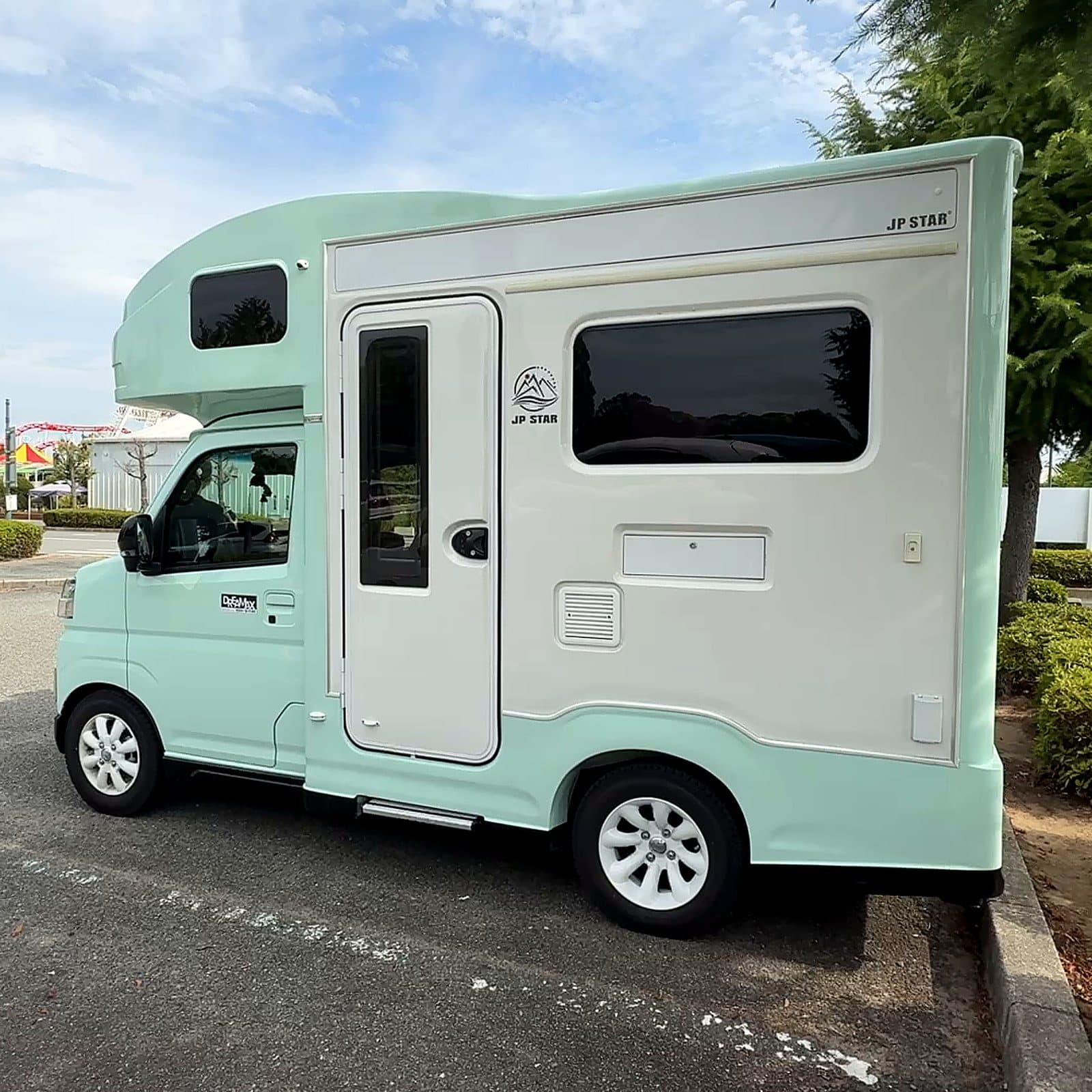
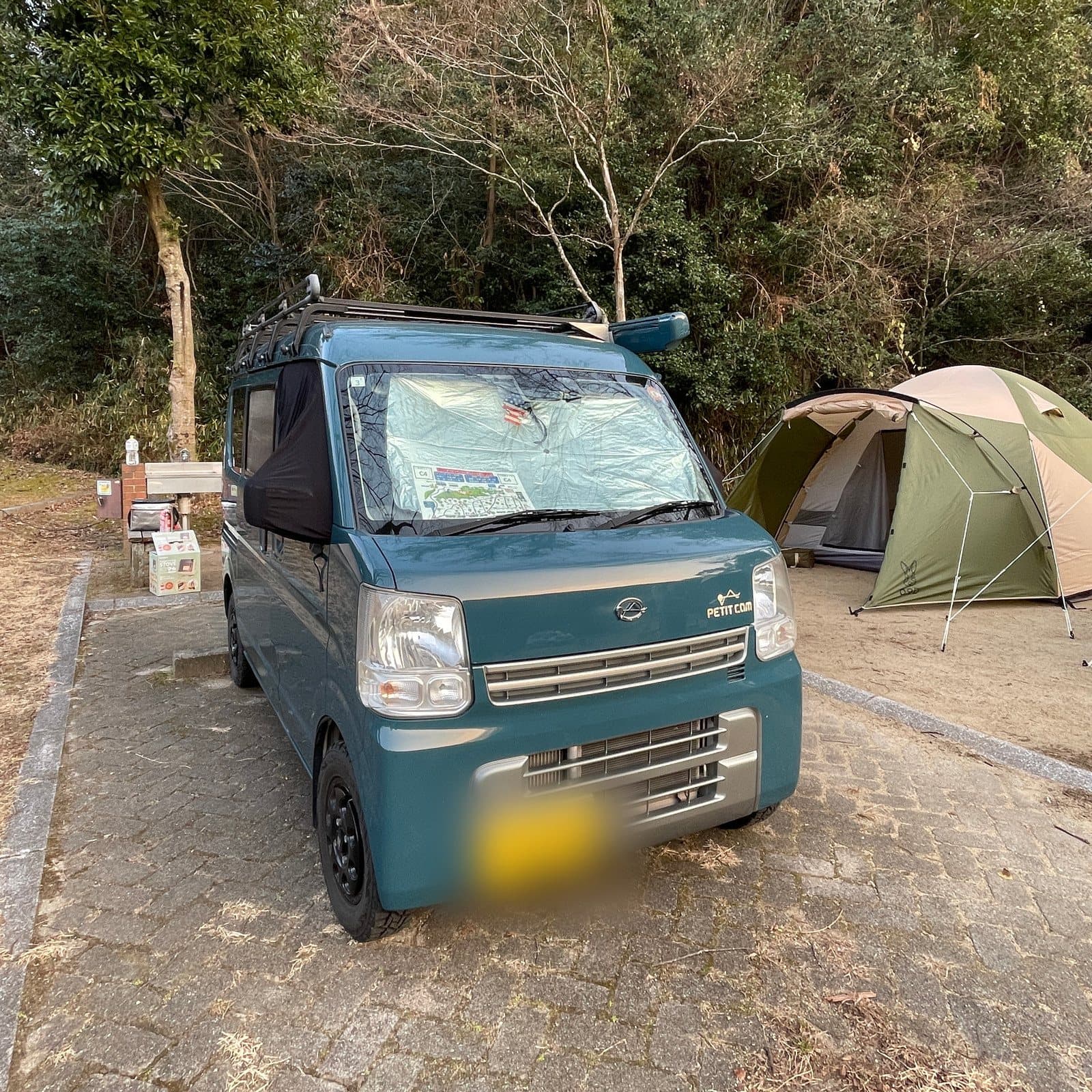
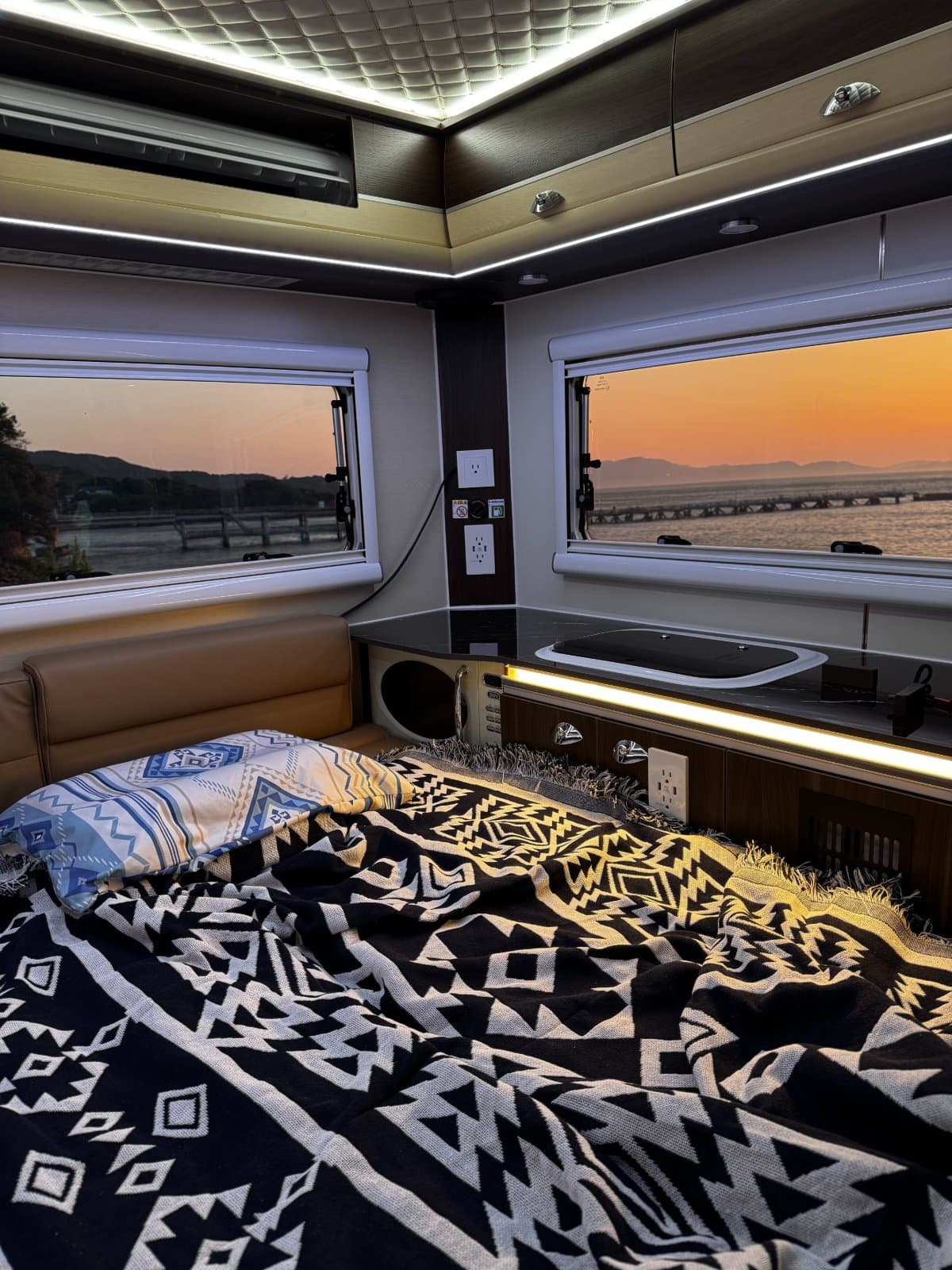
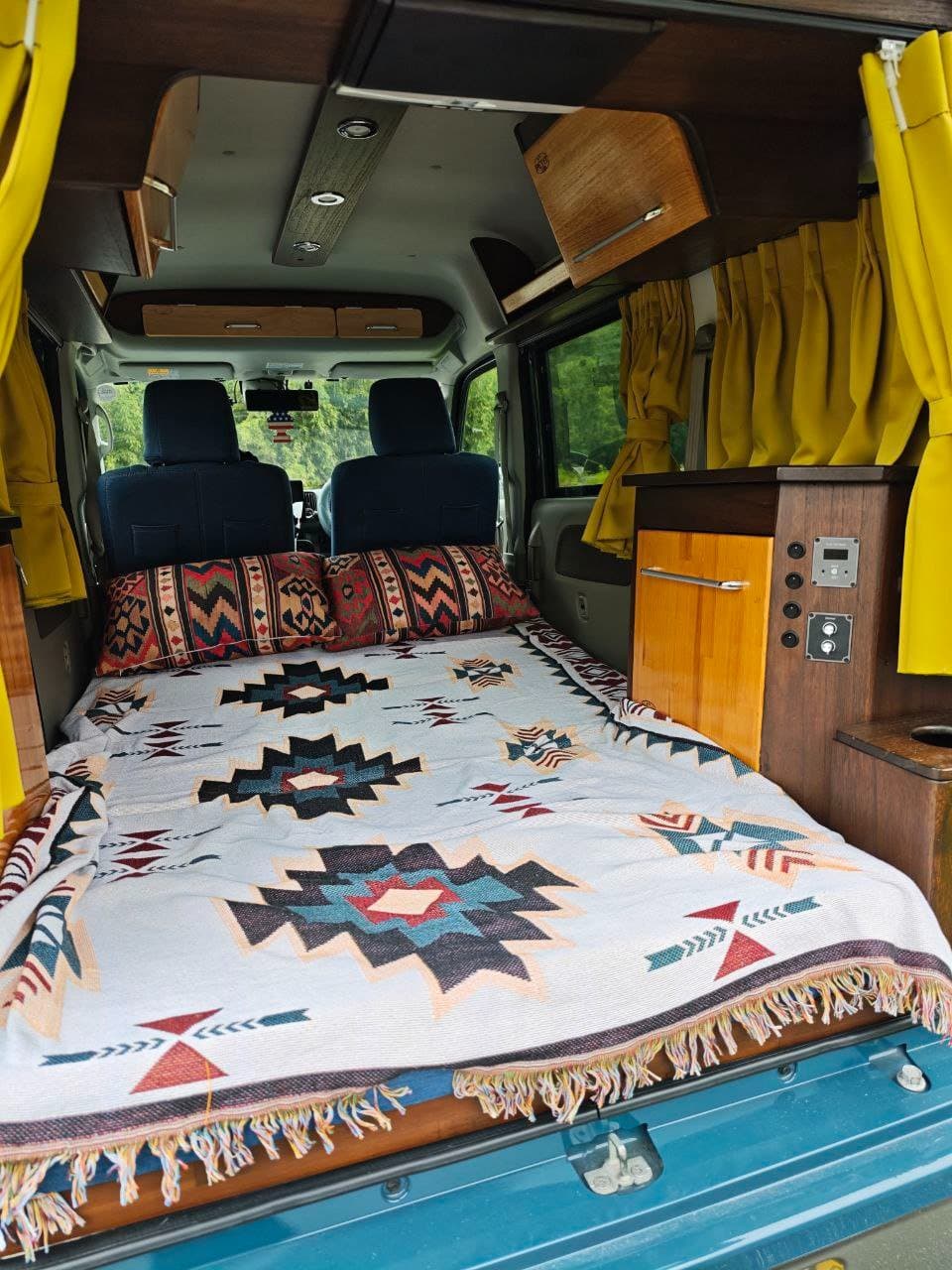
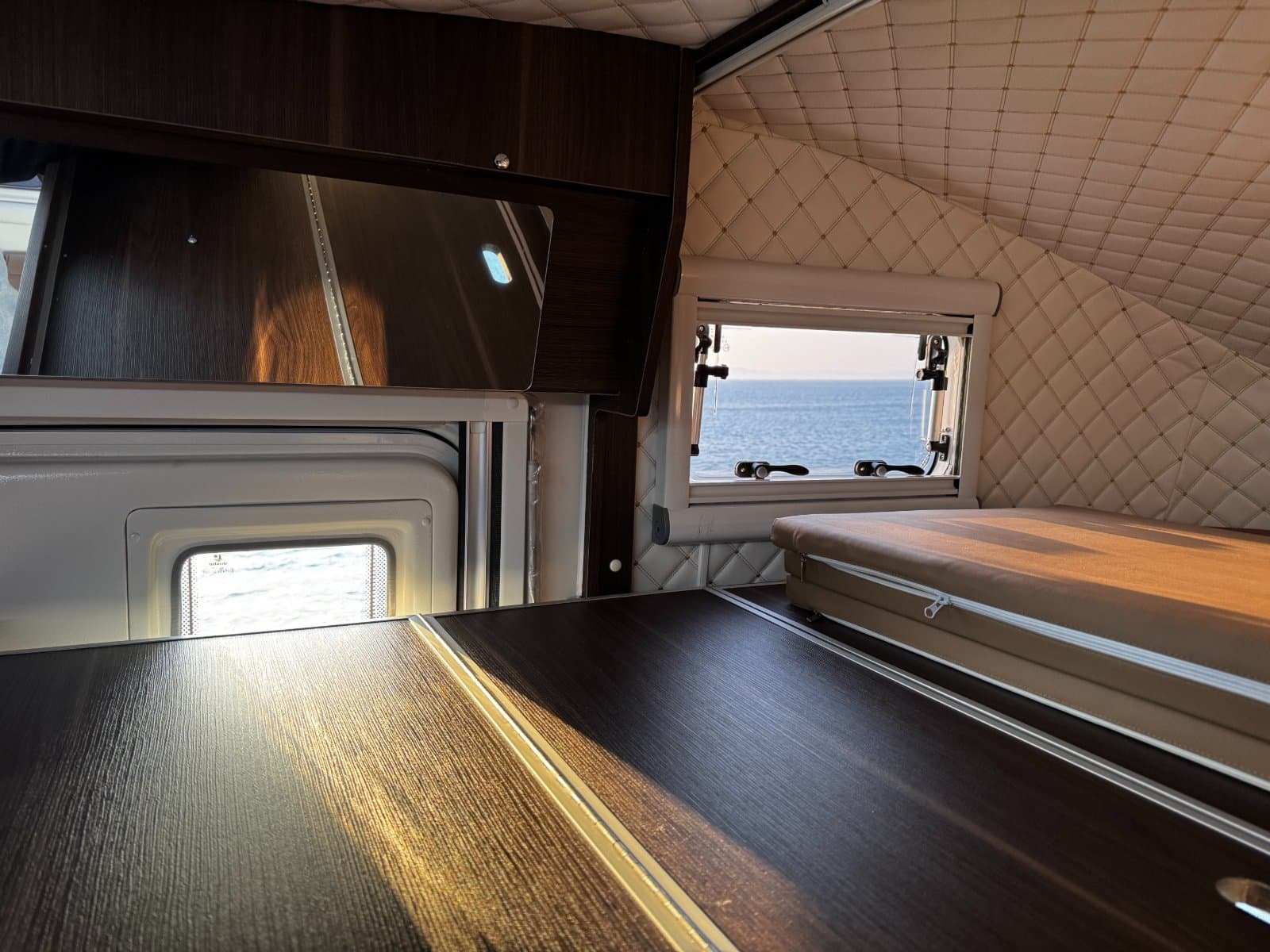
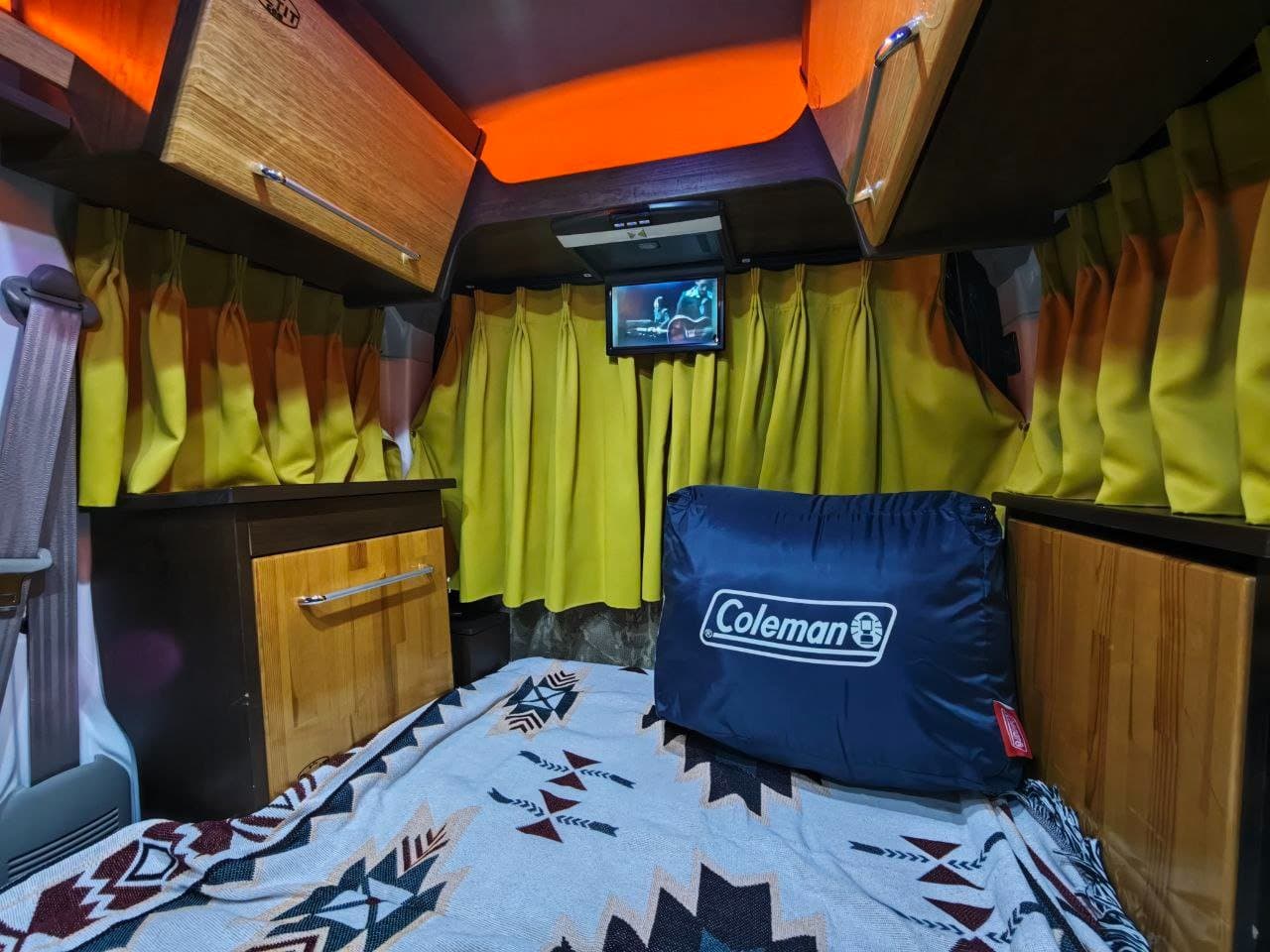
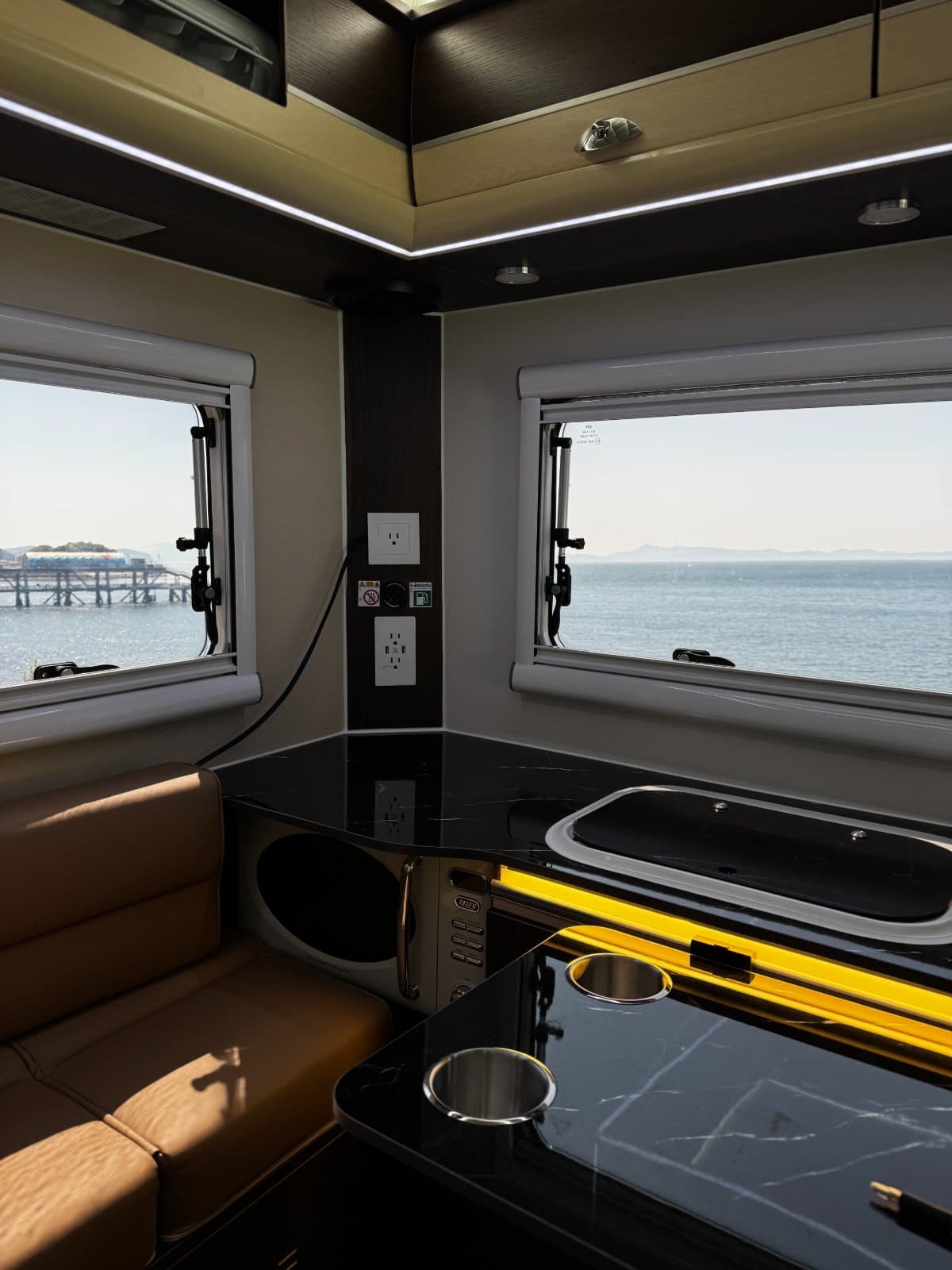
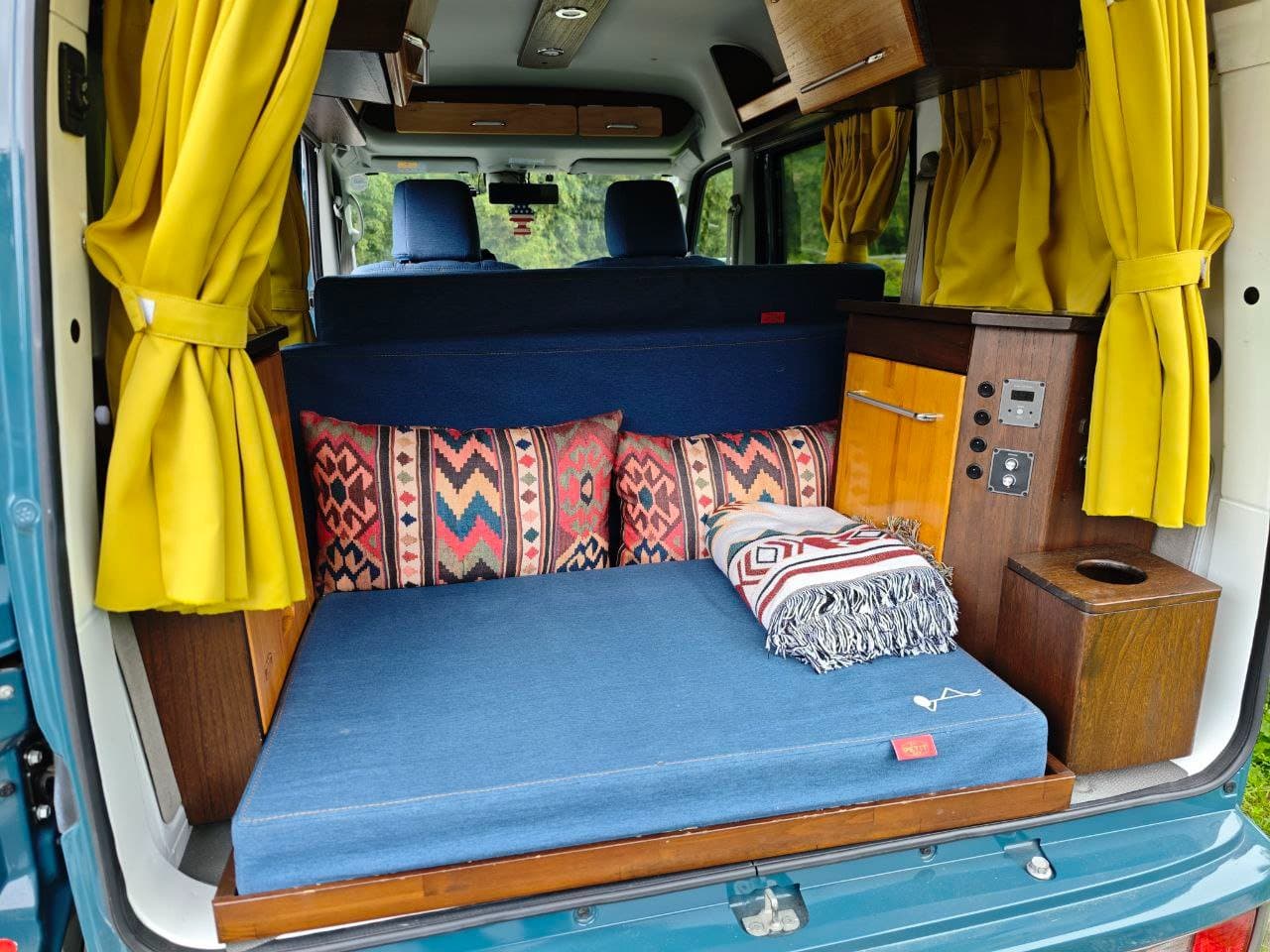
JP STAR Happy 1 Turbo: a kei-class camper, seats 4 and sleeps 4, 660 cc 4WD. Fridge, sink and microwave, air-conditioning, an FF heater (fuel-fired) plus floor heating (two heating systems), an outdoor shower for rinsing feet and sand, a 5,120 Wh lithium battery, powered awning and a 360-degree around-view monitor. Height 2.6 m. From ¥16,000 per weekday, excluding tax. Petit-Cam Villa (Suzuki Every): seats 2 and sleeps 2, 658 cc turbo, a wide flat bed, height 2.0 m. From ¥9,000 per weekday, excluding tax. Both carry winter tyres from November to April.
DREAMAX has a wide range of add-on equipment, including the table-and-chair set, the BBQ grill (designated campsite areas only), the Iwatani cassette stove, a BougeRV 39-litre car fridge, Coleman sleeping bags and a blackout tarp. Child seats and the ETC toll card are free; tolls are settled when you return the van.
Campers for this trip
FAQ
Can I collect the van on Friday evening?
Yes. DREAMAX hands over at Osaka city hotels, at a location you choose, or at Kansai International Airport. Put your preferred time and place in the notes when booking; bookings need to be made at least one day ahead.
Is it really allowed to sleep at a roadside station?
Resting overnight in the vehicle is accepted. Keep the engine off, keep tables and chairs inside, and take your rubbish away. Tents and barbecues belong on an auto-camp pitch. The Happy 1 Turbo runs its air-conditioning from the battery and heats with an FF heater (fuel-fired) plus floor heating, so there is no need to idle.
Can I rent for just two nights?
Yes. There is no minimum rental length; even a single night is fine.
Is Lake Biwa possible in winter?
Yes. The campers carry winter tyres from November to April. The north shore and Makino get snow, so drain the fresh-water tank before entering a snow area and do not push on if the road is icy. Awaji rarely sees snow.
How much are the tolls?
From central Osaka to the west shore of Lake Biwa or to Awaji is a few thousand yen each way, and the Akashi Kaikyo Bridge has ETC discounts. The ETC card is lent free of charge and tolls are settled at return.
When can I see the Naruto whirlpools?
They are largest around high and low tide on spring tides (near the new and full moon), and spring and autumn are the best seasons. Cruises leave from Fukura harbour; check the tide table and sailings before you go.
Related guides
Looking for more? All car-camping spots in Japan · Driving route library
This weekend: the lake or the island?
Browse camper vans