
Family guide
Family Campervan Rental from Osaka: A Guide for Travelling with Children
Travelling with small children means fitting every day around hotel check-in times, restaurant hours and naps. A campervan carries the bed, the fridge and the power with you, so the day can run at your children's pace instead. This guide covers a family trip from Osaka in a DREAMAX campervan: which camper suits which family size, how the free child seats work, what is on board, a 3-day itinerary to Shirahama with alternatives, how to behave overnight at a roadside station, a worked budget and how to book.
By Gary, campervan & car-camping advisor at DREAMAX
Which camper for which family: Treasure 1 or Happy 1 Turbo
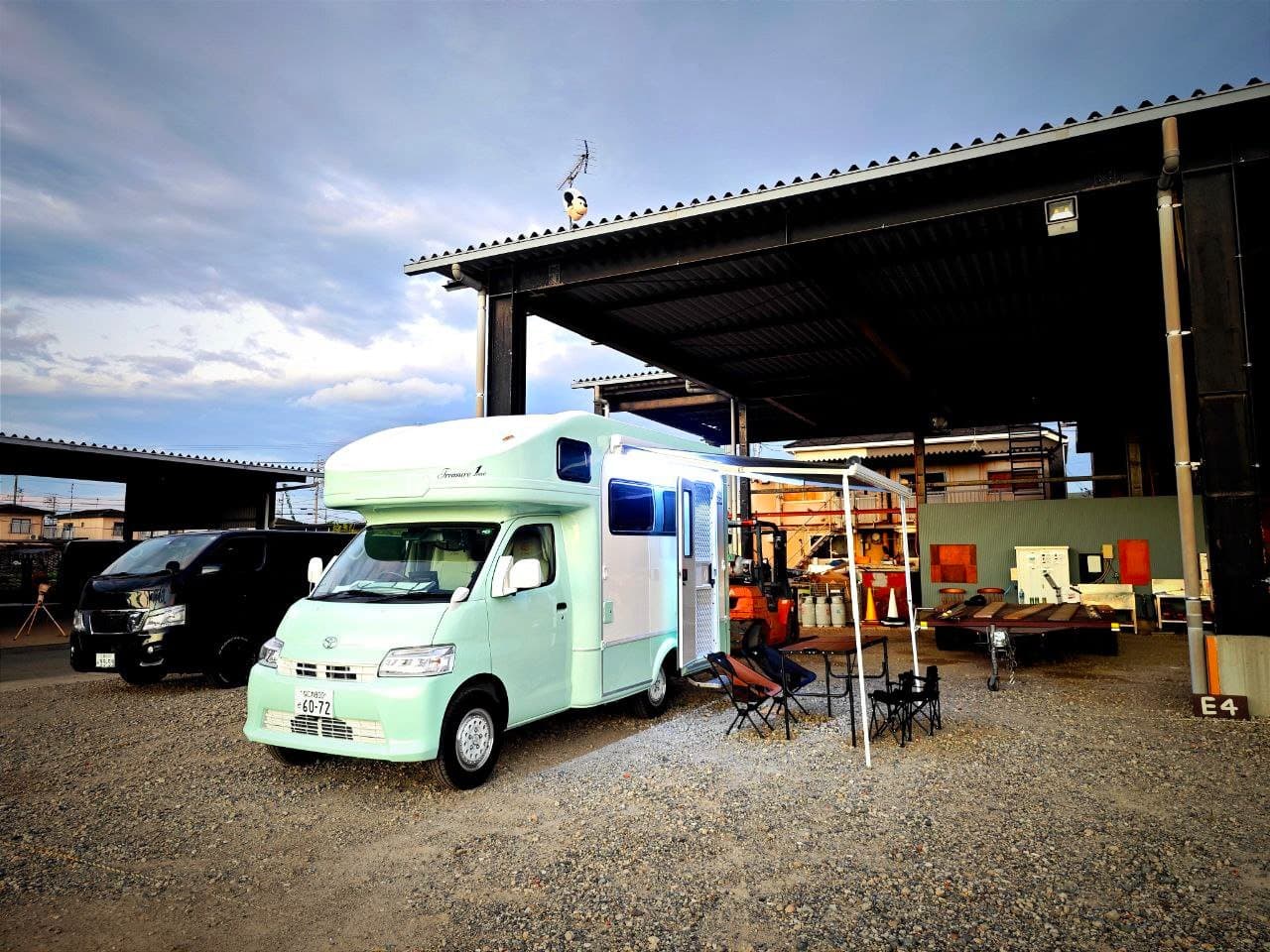
Two home-style campers in the DREAMAX fleet suit a family trip from Osaka: the fully equipped JP STAR Treasure 1 and the kei-class JP STAR Happy 1 Turbo. Both are automatic and four-wheel drive, and both can be driven on a standard car licence (AT). The difference is how many people they seat and sleep, and how big they are on the road.
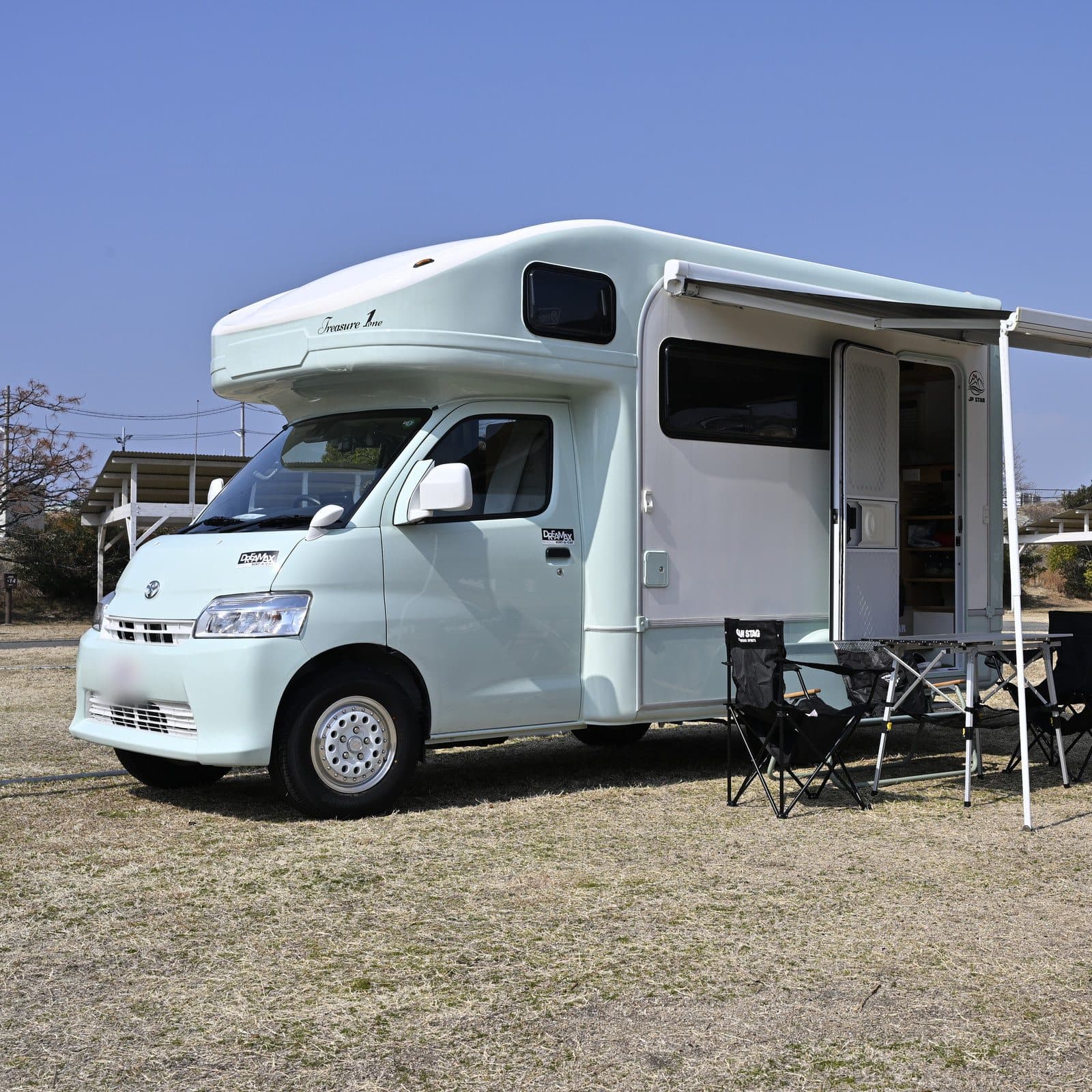
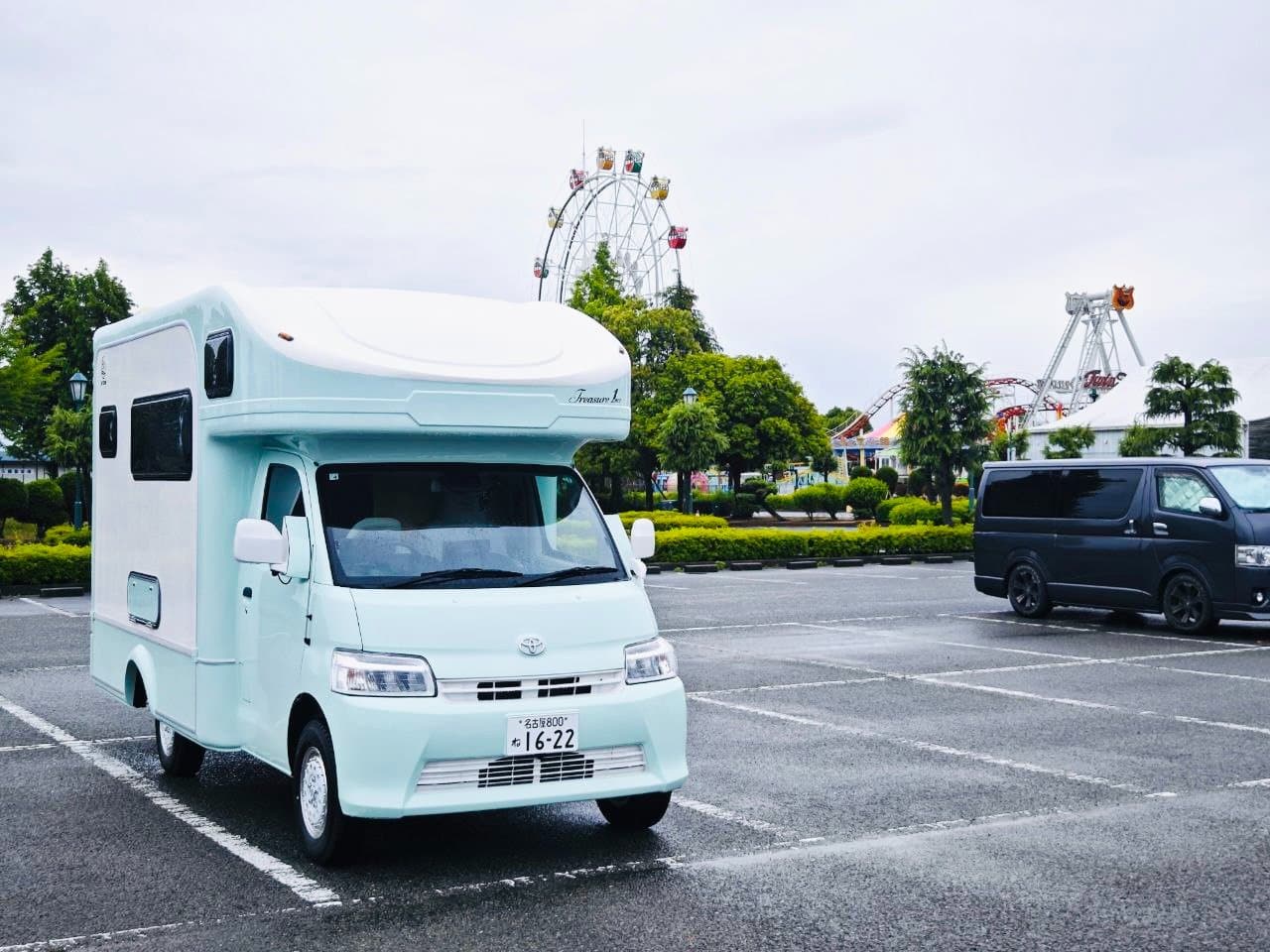
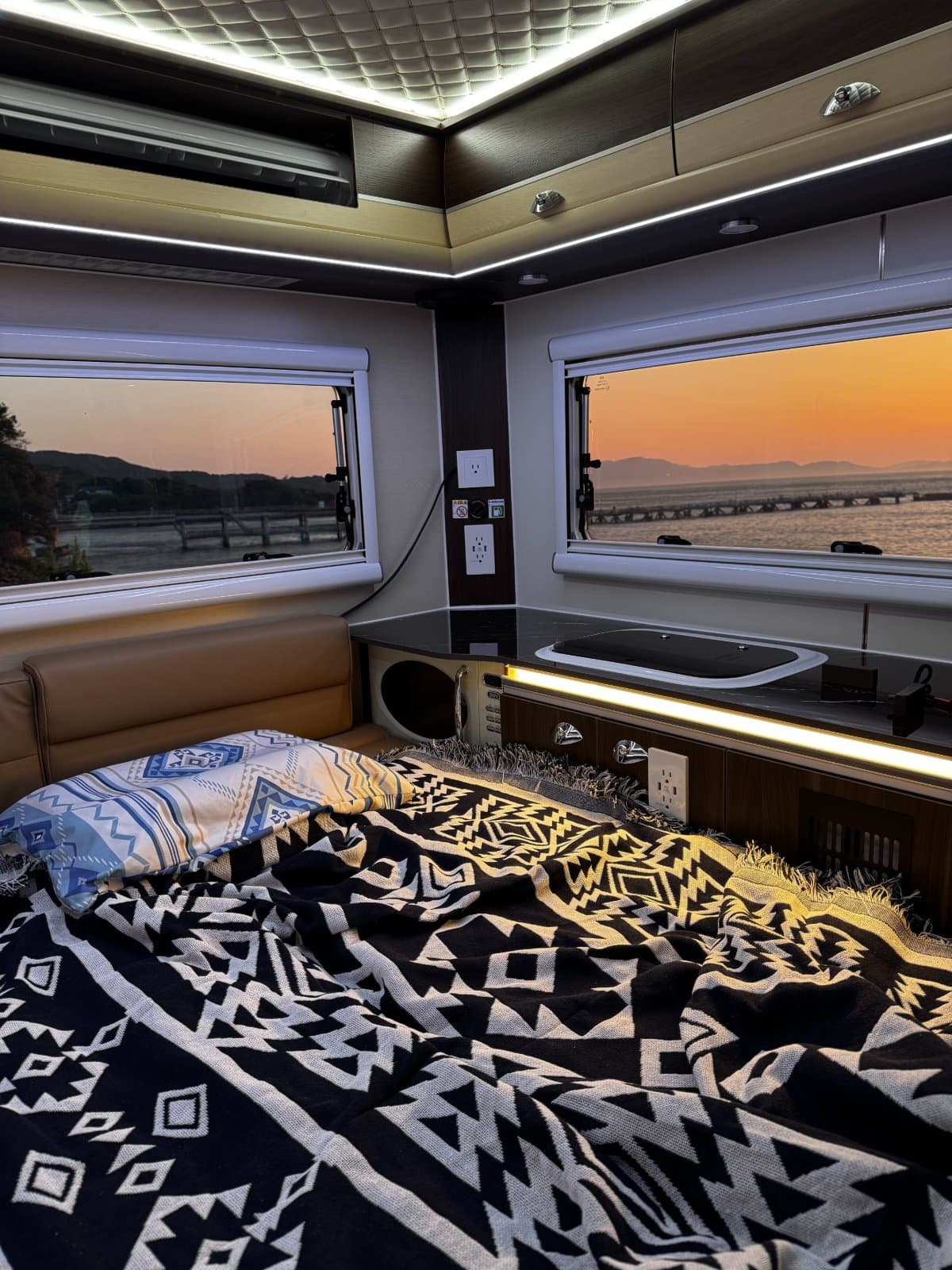
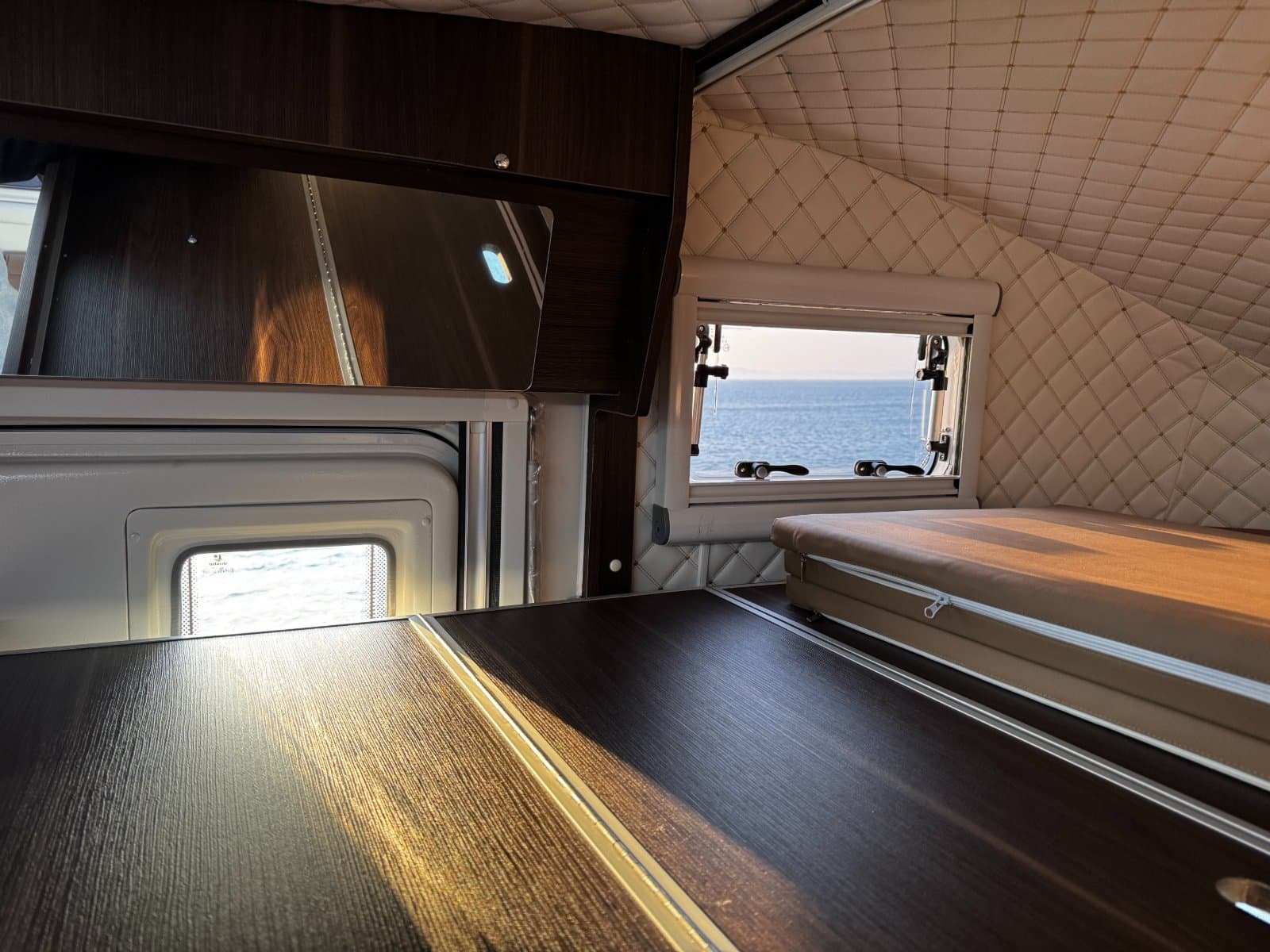
The Treasure 1 seats six and sleeps four adults plus two children. There is a double bed in the loft above the cab, and the living-area table lowers to make a king-size bed for four adults. Two parents with two or three children, or three generations together, fit in one vehicle. It is 4.9 m long and 2.8 m tall, so multi-storey car parks and low bridges need care.
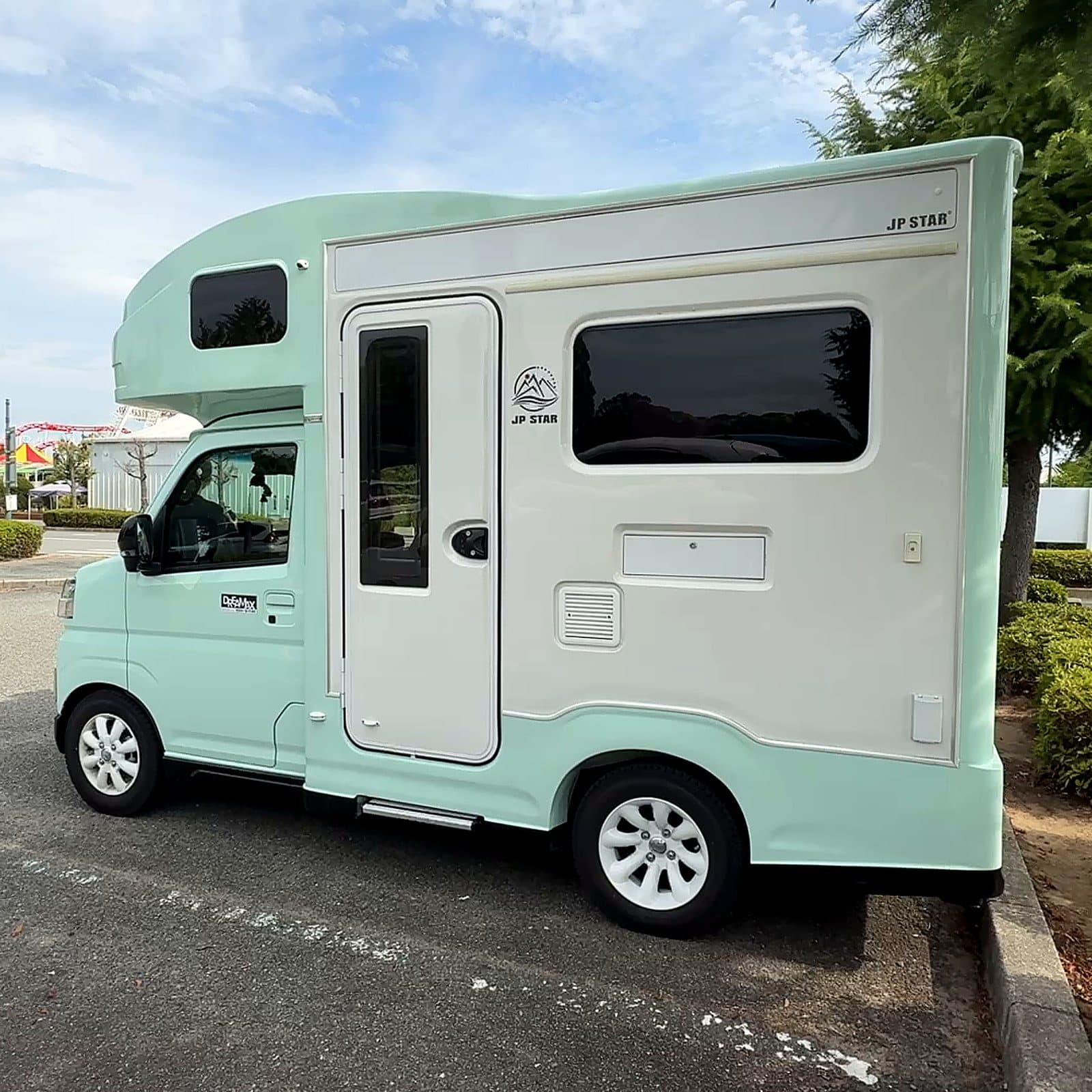
The Happy 1 Turbo seats four adults and sleeps four. As a 660 cc kei camper it is easy to manoeuvre in narrow streets and small car parks near sights, and it is the gentler option if you have never driven a camper. A 360-degree around-view monitor is standard, which removes most of the blind spots when parking with children about. For two parents with one or two children, this is enough.
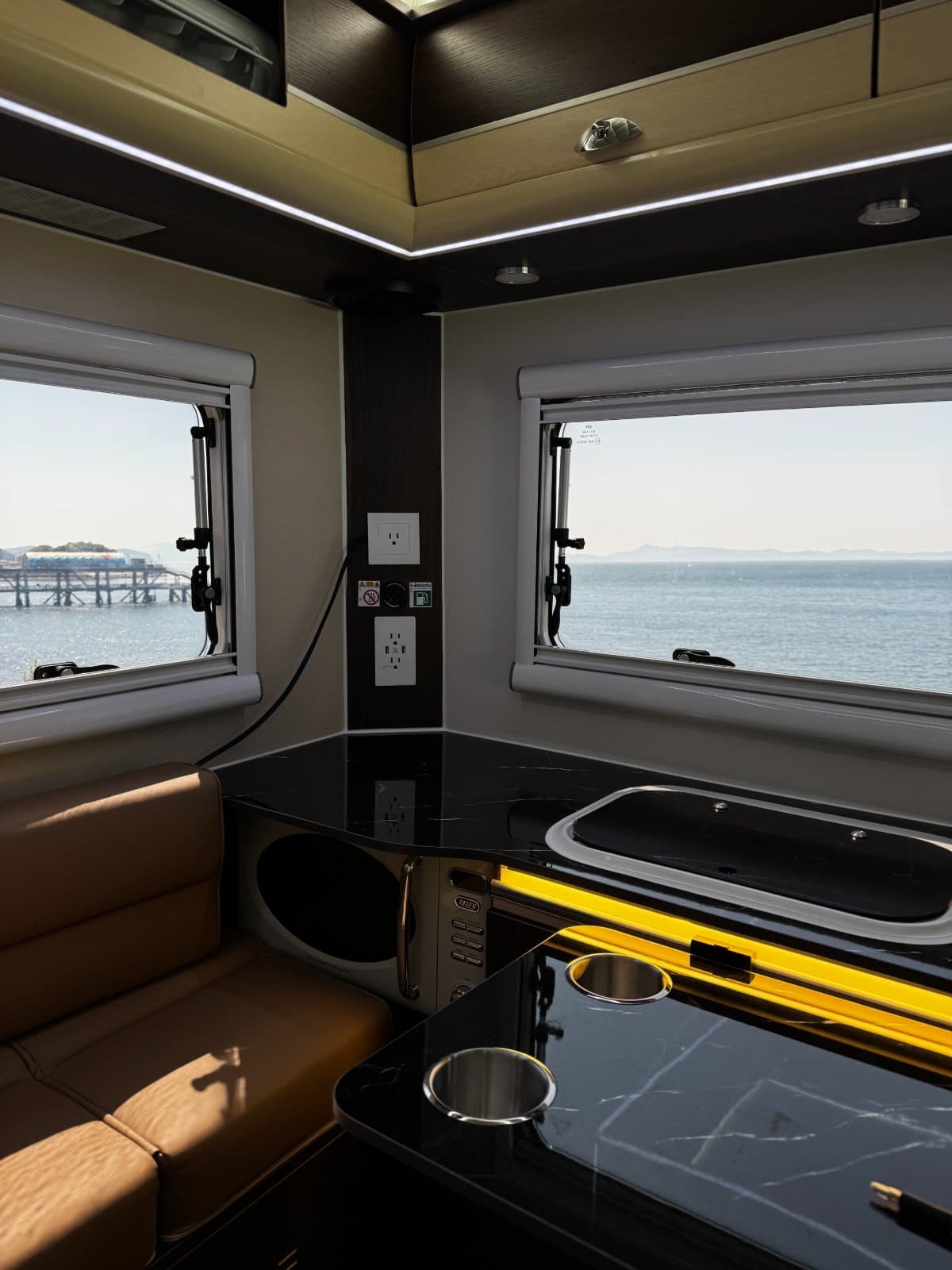
- Treasure 1: seats 6, sleeps 4 adults + 2 children, 2.8 m tall. IH cooktop, extractor fan, microwave, fridge, sink. An FF heater plus household air-con heating (two heating systems). Outdoor shower for rinsing feet and sand, with a 60-litre fresh-water tank.
- Happy 1 Turbo: seats 4, sleeps 4 adults, 2.6 m tall. Microwave, fridge, sink. An FF heater (fuel-fired) plus floor heating (two heating systems), an outdoor shower for rinsing feet and sand, and a 360-degree monitor.
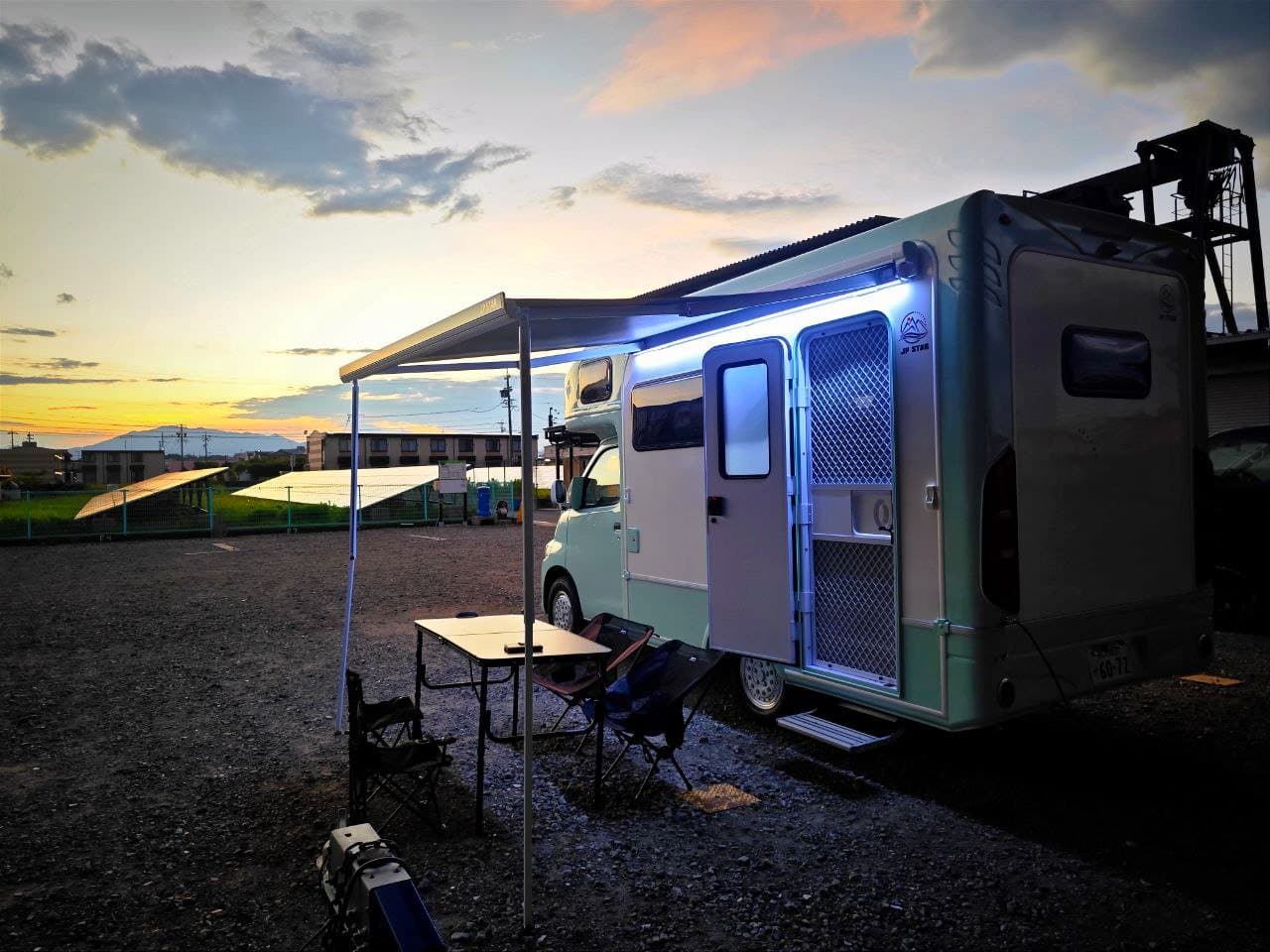
- Both: air-conditioning and heating, TV, a 400 Ah (5,120 Wh) lithium battery, a 3,000 W inverter, rooftop solar and a powered awning.
Child seats are free, and the law requires them under six
Japanese law requires a child restraint for any child under six, and that applies in a campervan exactly as it does in a car. DREAMAX lends two kinds free of charge: an ISOFIX infant seat for ages 0 to 4 (roughly 9 to 18 kg) and a seatbelt-secured booster for ages 4 to 10 (roughly 15 to 36 kg).
Select the number you need under add-on equipment when you book and the seats will be fitted before handover. You will be shown how to remove and refit them, so swapping seats around mid-trip is no trouble. Families flying in do not need to check a car seat as luggage.
One rule matters more than any other: while the vehicle is moving, everyone sits in a seat with the belt fastened. The rear of a camper looks roomy enough to walk about in, but a child playing on the bed or sofa while driving is dangerous. Set the rhythm on day one: run around at every roadside station, sit down in the van.
What is on board: kitchen, fridge, power and shower
The fridge and microwave are the two things a family uses most. Baby food, milk and supermarket ready meals can be warmed in the van, so you are not walking the streets looking for a restaurant the children will eat in. The Treasure 1 adds an IH cooktop with an extractor fan, enough for noodles or soup. The Happy 1 Turbo has the microwave, fridge and sink. Both include a basic cooking set with bowls, chopsticks, spoons and cups for four.
Power comes from a 400 Ah (5,120 Wh) lithium-ion battery through a 3,000 W inverter. Air-conditioning and heating run with the engine off, and phones, tablets and an electric kettle are no problem. The battery charges from the rooftop solar panel and while driving, and at an RV park you can plug into shore power. Not having to think about the battery during a summer nap or a cold morning is a real comfort with small children.
Both campers have an outdoor shower; on the Treasure 1 it is fed from the 60-litre fresh-water tank. It is for rinsing feet and sand, not for bathing, which makes it ideal after the beach before anyone climbs in. Bathing is done at an onsen or a sento bathhouse. Neither camper has a toilet, so the itinerary needs to include roadside stations and convenience stores, covered below.
DREAMAX also offers a wide range of add-on equipment. Families most often take the table and chair set, the BBQ grill, the blackout tarp, an EcoFlow power station and the board-game set. A rechargeable fan light in summer and a ceramic heater in winter make the cabin noticeably more comfortable.
A 3-day family itinerary from Osaka: Shirahama
For a first family camper trip, pick one destination and stay two nights. Moving camp every day drains the adults through luggage and drains the children through disruption. Shirahama in Wakayama, about 2 to 2.5 hours from Osaka, packs a zoo, a beach, hot springs and a seafood market into a few kilometres, which is exactly the right scale for three days.
Day 1: collect the van at Kansai Airport or in Osaka city and head south on the Hanwa Expressway. Arrive in Shirahama after lunch and go straight to Adventure World, where the safari area and the marine shows hold a pre-schooler's attention. In the evening buy fish for dinner at the Toretore seafood market and settle into the adjacent Toretore RV Park, which has power hook-ups and bathing facilities. The first night should always be somewhere nothing can go wrong.
Day 2: a morning of sand at Shirarahama beach, with swimming in summer. In either camper, rinse the sand off your feet with the outdoor shower before getting back in. In the afternoon see the Sandanbeki cliffs and Senjojiki rock shelf, then soak in the Sakinoyu open-air onsen. Watch the sunset at Engetsu Island. Stay a second night at Toretore RV Park and there is nothing to pack up.
Day 3: leave late, stop at Wakayama Marina City on the way back for lunch at the Kuroshio market, and return the van in Osaka in the afternoon. Total driving for the three days is about 300 to 350 km.
Other destinations: Awaji Island, Lake Biwa and Nara Park
Awaji Island is about 1.5 hours from Osaka across the Akashi Kaikyo Bridge. It has a children's amusement park (Awaji World Park ONOKORO), an anime-themed park (Nijigen no Mori) and the seasonal flower fields at Awaji Hanasajiki, so every age is catered for. The roadside station Awaji sits under the bridge itself, with ships passing in front and the bridge overhead, which is entertainment enough for many children. The island also has auto campsites and parks with hot springs.
Lake Biwa in Shiga is also about 1.5 hours away. The Lake Biwa Museum has extensive aquarium displays and is the best rainy-day fallback in the region. Auto campsites with small beaches line the shore, and the shallows are good for paddling in summer. The lake torii of Shirahige Shrine and the canals of Omihachiman are the adults' part of the day.
Nara Park is about an hour from Osaka. Feeding deer crackers to the deer is probably the moment small children remember longest. See the Great Buddha at Todai-ji, then sleep at Hari TRS roadside station on the Meihan road, with the option of continuing to Iga or Shigaraki the next day. Hari TRS has a 24-hour convenience store, so late-night toilets and drinks are never a worry.
Overnight etiquette at roadside stations and RV parks
Roadside stations (michi-no-eki) and expressway service areas are rest areas. Sleeping in the vehicle is fine; putting chairs and tables outside, opening the awning, lighting a fire or hanging laundry is only for campsites. If the children want to run, take them to the lawn or the playground area: the car park has vehicles moving through it at all hours.
Keep things quiet from about 9 pm and switch the engine off. Because the camper's heating and cooling run from the FF heater and the battery, you can be comfortable without idling and without disturbing the vehicles beside you. Take your rubbish with you; the bins at a roadside station are for things bought in its shop. Clearing your space before the station opens in the morning is basic courtesy to the people who run it.
RV parks and auto campsites take bookings and provide power, fresh water, grey-water disposal and rubbish collection. With children, plan on an RV park at least every other night to refill the water tank, fully charge the battery, wash up and get everyone clean. Expect around ¥3,000 to ¥5,000 a night; roadside stations are free.
- Roadside stations and SA/PA: rest and sleep in the vehicle only. No setting up, no fires, no laundry.
- RV parks and auto campsites: book ahead. Power, water, grey-water disposal and rubbish collection.
- No idling overnight, quiet from around 9 pm, take rubbish with you.
Safety, toilets and bathing
Everyone seated and every child in a restraint while moving is the baseline. In car parks, an adult steps down from the powered step first and hands the children down; do not let them jump. In summer, never leave a child in the vehicle even for a few minutes. The air-conditioning does run with the engine off, but a short shop is safer with everyone together.
There is no toilet on board, so build toilet stops into the day deliberately. Roadside-station toilets are open around the clock and convenience stores are dependable. Baby-changing tables are usually in the accessible toilet at a roadside station. If a toddler is toilet-training, a portable potty from a drugstore or 100-yen shop earns its place in the van the first time you meet a traffic jam.
Bathing is at onsen and sento. Shirahama has Sakinoyu and Toretore no Yu, and day-use onsen are dotted around Awaji and Lake Biwa. The outdoor shower on both campers is for rinsing feet and sand, not for bathing. While the children are small, make a day-use onsen the late-afternoon destination: bath, then straight into bed in the van.
A worked budget: a family for three days
DREAMAX camper day rates come in weekday, weekend and peak tiers, and each vehicle's pre-tax price is shown on its car page. Fully equipped home-style campers start from ¥20,000 per day before tax. Here is what a Treasure 1-class trip to Shirahama for three days looks like.
Vehicle: ¥20,000 × 3 days = ¥60,000 before tax, ¥66,000 with 10% consumption tax. Optional vehicle insurance (charged per day) and the cleaning fee are extra at the amounts on the car page. Tolls for the Osaka to Shirahama round trip run about ¥6,000 to ¥8,000 (the ETC card is free and settled on return), fuel about ¥5,000 to ¥7,000, and two nights at an RV park ¥6,000 to ¥10,000. Excluding insurance and food, plan on roughly ¥85,000 to ¥95,000.
That is a six-seat vehicle, two hotel rooms' worth of accommodation and all the transport in one figure. Rentals of seven days or more get 10% off the vehicle rate automatically (20% at 14 days, 30% at 28), so a longer summer-holiday trip brings the per-day cost down further. Child seats, the ETC card and the basic cooking set are free.
How to book
Booking is entirely online. Choose the camper and dates, pick the number of child seats and any equipment under add-on equipment, write the handover point (Kansai International Airport, your Osaka hotel or the DREAMAX office) in the notes, and pay. The price appears in full as you go and nothing is added afterwards. There is no minimum rental length; one night is fine.
Book at least one day ahead; for same-day requests, get in touch directly on WhatsApp or LINE. Cancellation is a full refund up to 15 days before departure, 70% at 8 to 14 days, 50% at 4 to 7 days and no refund within 3 days, less a 4% payment fee in every case. Children's health is unpredictable, so once the dates are set, booking early is the safer choice.
At handover, staff walk you through the vehicle and equipment item by item: making up the beds, reading the power panel, filling and draining water, fitting and removing the child seats. Allow about an hour. For the first half-hour of driving, stick to main roads at an easy pace until the size of the vehicle feels familiar.
Campers for this trip
FAQ
We are a family of five with two children. Which camper suits us?
The Treasure 1. It seats six and sleeps four adults plus two children, split between the loft bed and the king-size bed in the living area. Two parents with one or two children are fine in the Happy 1 Turbo, which seats and sleeps four.
Are child seats really free, and until what age are they needed?
Yes, free. DREAMAX lends an ISOFIX infant seat for ages 0 to 4 and a booster for ages 4 to 10. Japanese law requires a restraint under six, and keeping a booster is recommended for older children who are still short. Choose the number under add-on equipment when booking.
Is there a toilet on board?
No. Use the toilets at roadside stations, expressway service areas and convenience stores. Baby-changing tables are usually in the accessible toilet at a roadside station.
Can we warm milk and baby food in the van?
Yes. Both campers have a microwave and a fridge, and an electric kettle works too. The Treasure 1 also has an IH cooktop for simple cooking.
Does the cabin get hot in summer?
The air-conditioning runs from the large battery with the engine off. Even so, never leave a child alone in the vehicle on a summer day. The skylight and insect screens let air through and the blackout curtains keep direct sun out.
I have never driven a campervan. Is that a problem?
Both are automatic. The Happy 1 Turbo is kei-car sized and drives like an ordinary van. The Treasure 1 is 2.8 m tall, so it cannot enter multi-storey car parks or pass under low bridges; DREAMAX staff go over this at handover.
What is the minimum rental?
There is no minimum. One night is fine. Rentals of seven days or more get 10% off the vehicle rate automatically.
Can we bring a pet?
No. Pets are not permitted in any DREAMAX vehicle.
Related guides
Looking for more? All car-camping spots in Japan · Driving route library
Pick the camper that fits your family and start planning
See campers and rates