
About Dreamax Connect
What Is Dreamax Connect? A Free Car-Camping Spot Finder for Japan: Roadside Stations, RV Parks, Ferries and Toll Roads in One Database
There are plenty of apps and websites that list places to sleep in your vehicle in Japan. Dreamax Connect is a free web service that puts the places you sleep (michi-no-eki roadside stations, RV parks, auto campgrounds), the car ferries, scenic toll road fares and multi-day campervan routes into a single database. It is run by DREAMAX Rent-a-Car, a campervan rental company in Osaka. On this page the Dreamax Connect editorial team explains what is in it, how the data is checked, and how a first-timer can use it to plan a trip.
By the Dreamax Connect editorial team
What Dreamax Connect is: one database for a car-camping trip
Dreamax Connect is a free trip-planning tool for people travelling around Japan by campervan or sleeping in their car, run by DREAMAX Rent-a-Car in Osaka. Planning a car-camping trip usually means checking several different websites: where you can sleep tonight, which road to take, how much the ferry costs and how early you need to be at the port, and what the toll roads will charge. Dreamax Connect keeps all of that in one database, so you can move between the pieces of a single itinerary without starting your research again every time.
As of September 2026, the database holds more than 7,900 places. More than 3,990 of them are stops where you can spend the night in a vehicle; the rest are sightseeing stops. Keeping the two apart matters: a place with a great view and a place where you may stay overnight are different things, and the data never blurs them. The overnight stops break down into 1,236 michi-no-eki roadside stations, 788 expressway service and parking areas (SA/PA), 672 RV parks and 1,296 auto campgrounds.
The spot, route, ferry and toll road pages are published in Japanese, English, Chinese (Traditional and Simplified) and Korean. Everything runs in the browser on your phone or computer; there is no app to install.
- Overnight stops: more than 3,990 (566 of them in Kansai)
- Stops with a hot spring on site: 747
- Stops marked as attested, with night-time facts backed by an official source: 439
- Campervan routes: 53 (31 of them starting in Osaka), 1–7 days
- Car ferries: 58 routes run by 29 operators, and 76 ferry terminals (fare table version 2026-07)
- Scenic toll roads: 24 (fare table version 2026-08)
- All figures as of September 2026
Spots, routes, ferries, toll roads: what each section gives you
The car-camping spot list covers michi-no-eki roadside stations, RV parks, auto campgrounds, expressway SA/PA and ferry terminals, grouped by region. Facilities, opening hours and fees for each stop are shown with their source and the date they were retrieved. The focus is on the things that only become a problem after dark: whether the toilets are open 24 hours, whether there is lighting at night, and what the facility or the road operator officially says about spending the night there. That is information a daytime sightseeing guide rarely carries, and here you can check it before you leave.
There are 53 campervan routes, 31 of which start in Osaka, running from a single day up to seven days. Each route has a day-by-day plan, the driving distance and the driving time, so it is a real itinerary rather than a list of sights stitched together. Driving times assume you are in a campervan: they are calculated at 1.2 times the standard car estimate. Alongside DREAMAX’s recommended routes there are kaido car-camping routes that drive an Edo-period highway end to end in a single day, and seasonal or themed routes for autumn leaves, skiing and Mount Fuji.
The car ferry section covers 58 routes from 29 operators. For each route it lists the vehicle fare, the crossing time, whether it is an overnight sailing, the check-in deadline, and where you can park for the night near the terminal before you sail. Check-in deadlines differ from operator to operator, so they are quoted in each operator’s own wording. Every fare table carries a version stamp, such as 2026-07, so you can see at a glance which fares you are looking at.
The scenic toll road section lists fares for 24 roads by vehicle class (fare table version 2026-08). A campervan is not always charged as a standard car on a toll road, and on the same road the fare can differ by up to four times depending on the class. Whether ETC is accepted also varies from road to road, so check each road’s official page as well before you set off.
Finally, the map tool brings the pieces together. Open connect.dreamax.co.jp/map and you can look at stops and routes on a map while you work out your own itinerary.
How the data is verified: sources, dates and “unconfirmed”
What Dreamax Connect cares about most is where each piece of information comes from. Every fact in the database carries its source (usually an official website) and the date it was retrieved. If a stop is listed as having 24-hour toilets, the page also tells you which official page said so and when. Being able to trace a fact back to its origin yourself is the minimum a dataset has to offer before you plan a trip on it.
Stops whose night-time facts (24-hour toilets, the facility’s stance on overnight stays, lighting) quote an official page or the Japanese Wikipedia are marked as attested. As of September 2026 there are 439 of them.
Anything the database does not have, or could not verify, is shown as “unconfirmed” rather than filled in with a guess. A map that papers over its gaps with assumptions looks friendlier, but it can leave you finding out late at night that you cannot stay where you planned. When a field says “unconfirmed”, you know exactly which detail to check with the facility directly.
The update rules are fixed, too. The map data is republished every 15 minutes. Ferry and toll road fare tables, and seasonal datasets such as autumn-leaves forecasts, winter closures and ski-area operating dates, are versioned and reviewed monthly. That is why the fare tables carry stamps like 2026-07 and 2026-08. If you spot a mistake, you can send a correction through the site.
- Every figure carries its source and its retrieval date
- Attested stops, whose night-time facts quote an official source: 439 (as of September 2026)
- Anything that cannot be verified is shown as “unconfirmed”, never guessed
- Map data is republished every 15 minutes
- Fare tables and seasonal datasets are versioned and reviewed monthly
How a first-timer uses it: a three-day trip from Osaka
If this is your first campervan trip, use the sections in the order below and you will not get lost. The example is a three-day trip starting in Osaka.
Plans change on the road. Rain may push you towards a different area, or you may need somewhere to stay tonight close to where you are. When that happens, message DREAMAX on WhatsApp or LINE: the staff answer using the same Dreamax Connect database you have been planning with. Support is available in four languages (Japanese, English, Cantonese and Mandarin), every day from 08:00 to 20:00 Japan time.
- Pick a route. In the route list, choose a three-day route from Osaka. “Sea of Kyoto & Kinosaki Onsen — 3 Days” covers 449 km and 9 stops; “Nanki-Shirahama & Kumano — 3 Days on the Kii Coast” covers 402 km and 8 stops. Because each day’s plan and driving time are written out, you know how much driving every day involves before you commit.
- Check the nights. For each night on the route, look the stop up in the spot pages. Michi-no-eki roadside stations and expressway SA/PA are for resting and napping only; they are not accommodation. For a proper night’s stay, choose an RV park or an auto campground. The spot page also shows whether there are 24-hour toilets and lighting, with the source and the retrieval date for each.
- Check the ferry and the toll roads. If the trip uses a ferry, check the vehicle fare, the crossing time and the check-in deadline on the ferry page. If you plan to drive a scenic toll road, look at the fare table to see which vehicle class a campervan falls into.
- Book the camper. Once the route and the number of days are settled, book a DREAMAX campervan. RV parks and campgrounds are booked directly with each site or through their own booking services: Dreamax Connect is not a travel agency and does not make accommodation bookings for you.
How it differs from a generic map app: no rules invented
A general map app will tell you where a roadside station is and what time it closes. It will not tell you whether you may spend the night there, or who says so. On a car-camping trip, that is exactly the part you most need to know.
Dreamax Connect does not make up rules. Whether you can stay somewhere is decided by the facility and by the road operator. The database’s job is to show what they officially say, with the source, and to write “unconfirmed” wherever they have said nothing. Every stop tells you whether overnight stays are allowed, and on whose confirmation.
Michi-no-eki roadside stations and expressway SA/PA are places to rest and nap; they are not accommodation. For a proper overnight stay, the spot pages point you to RV parks and auto campgrounds. Keeping that distinction intact matters, both for travellers and for the communities that provide these places.
The other difference is that the numbers are kept from a campervan driver’s point of view. Driving times are estimated longer than for an ordinary car, toll road fares are shown by vehicle class, and the ferry pages list the vehicle fare and check-in deadline for every route. Because spots, routes, ferries and toll roads live in the same database, you can move between them within a single itinerary.
- Whether you can stay the night is shown in the facility’s or operator’s own official words, with the source
- Anything that cannot be verified is marked “unconfirmed”
- Roadside stations and SA/PA are for resting and napping; stay the night at an RV park or auto campground
- Driving times assume a campervan: 1.2 times the standard car estimate
- Fare tables carry version stamps (ferries 2026-07, toll roads 2026-08)
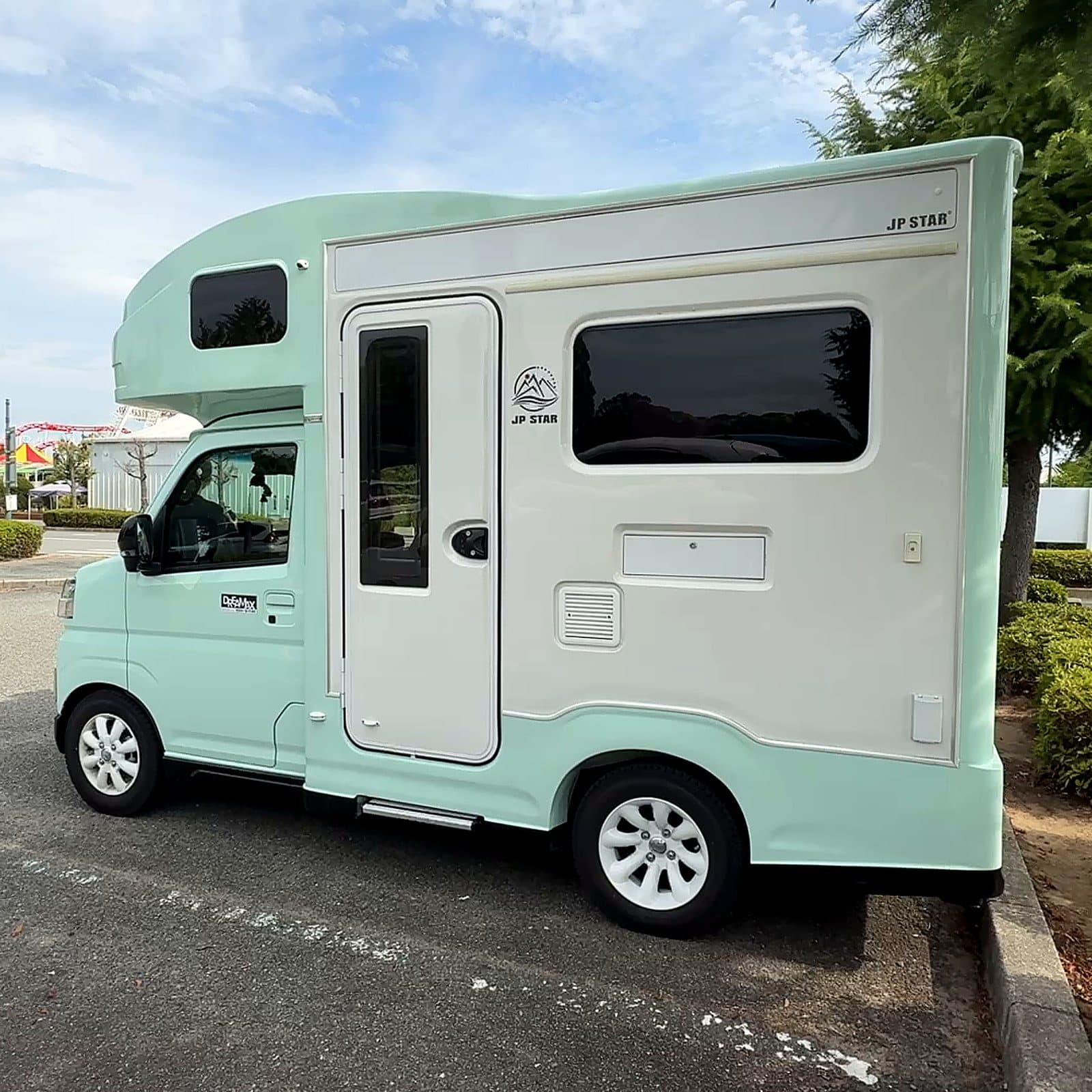
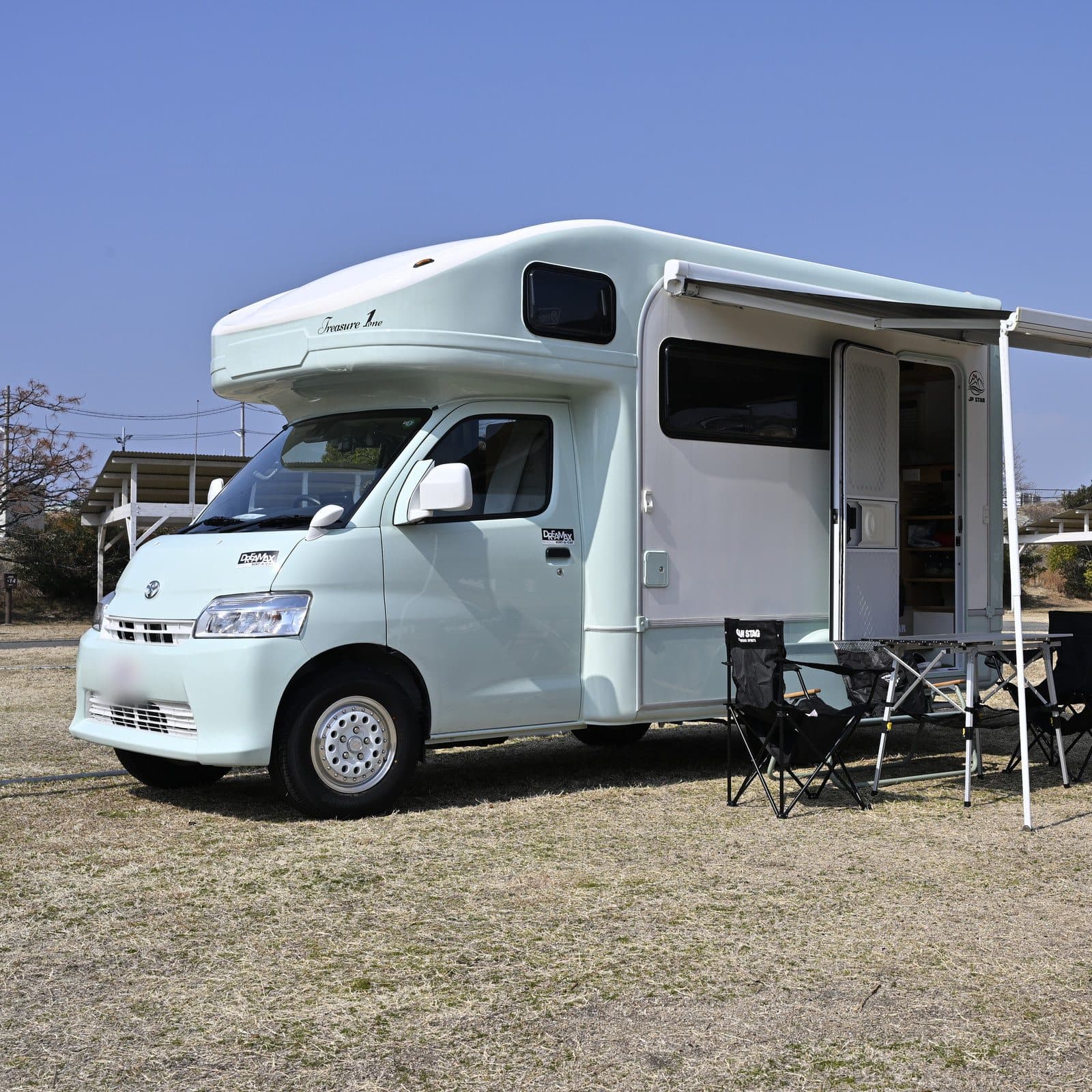
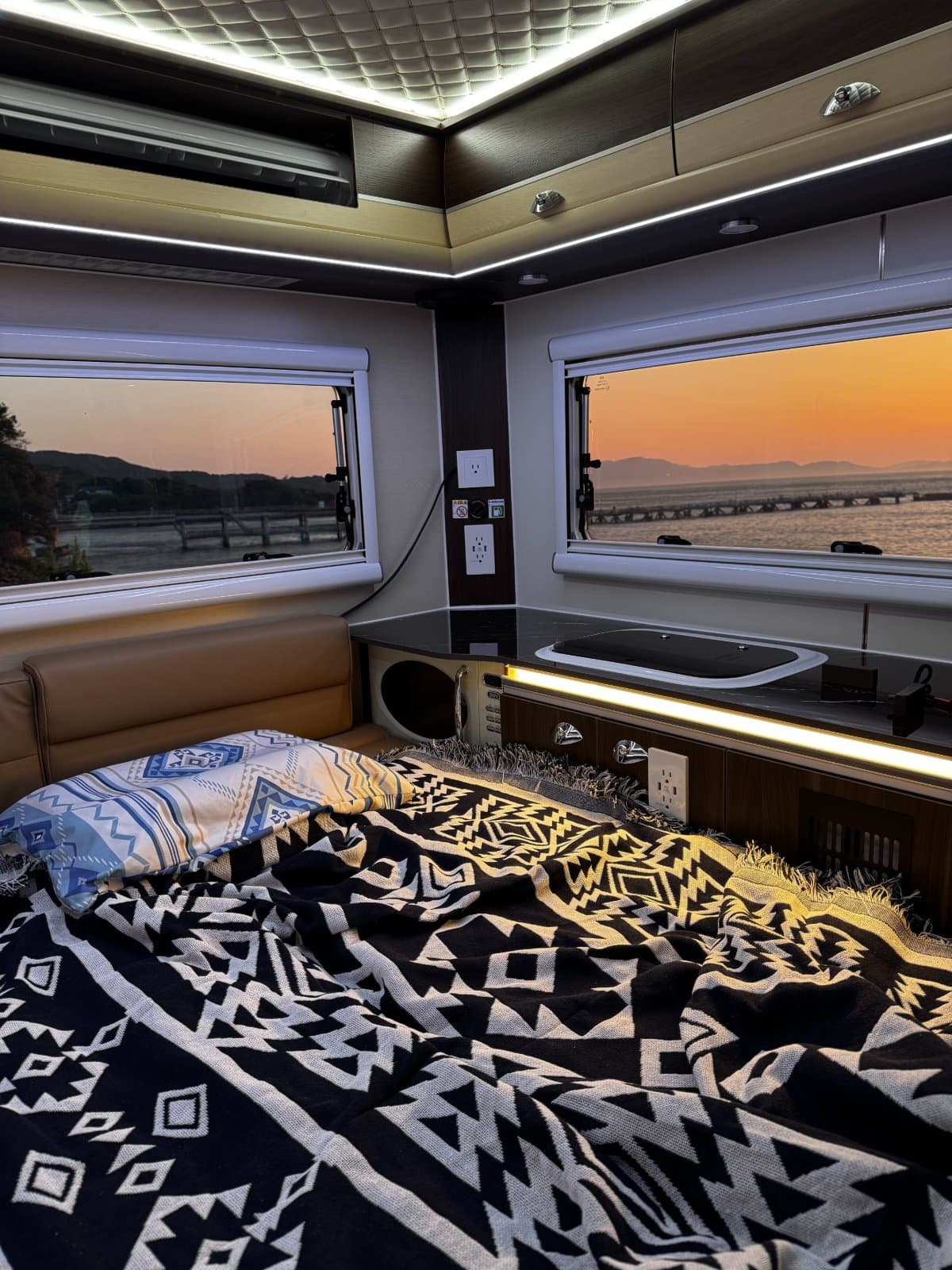
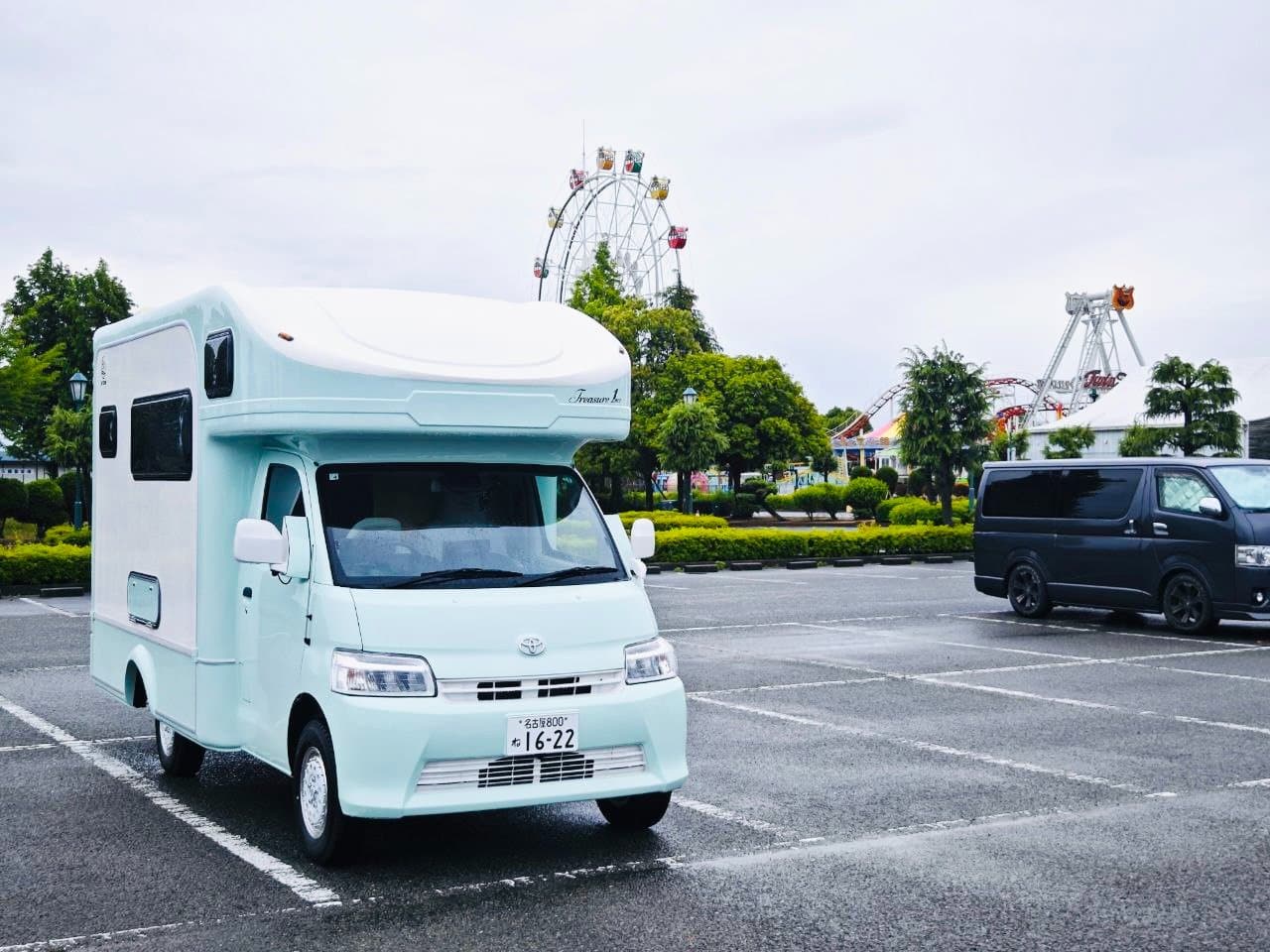
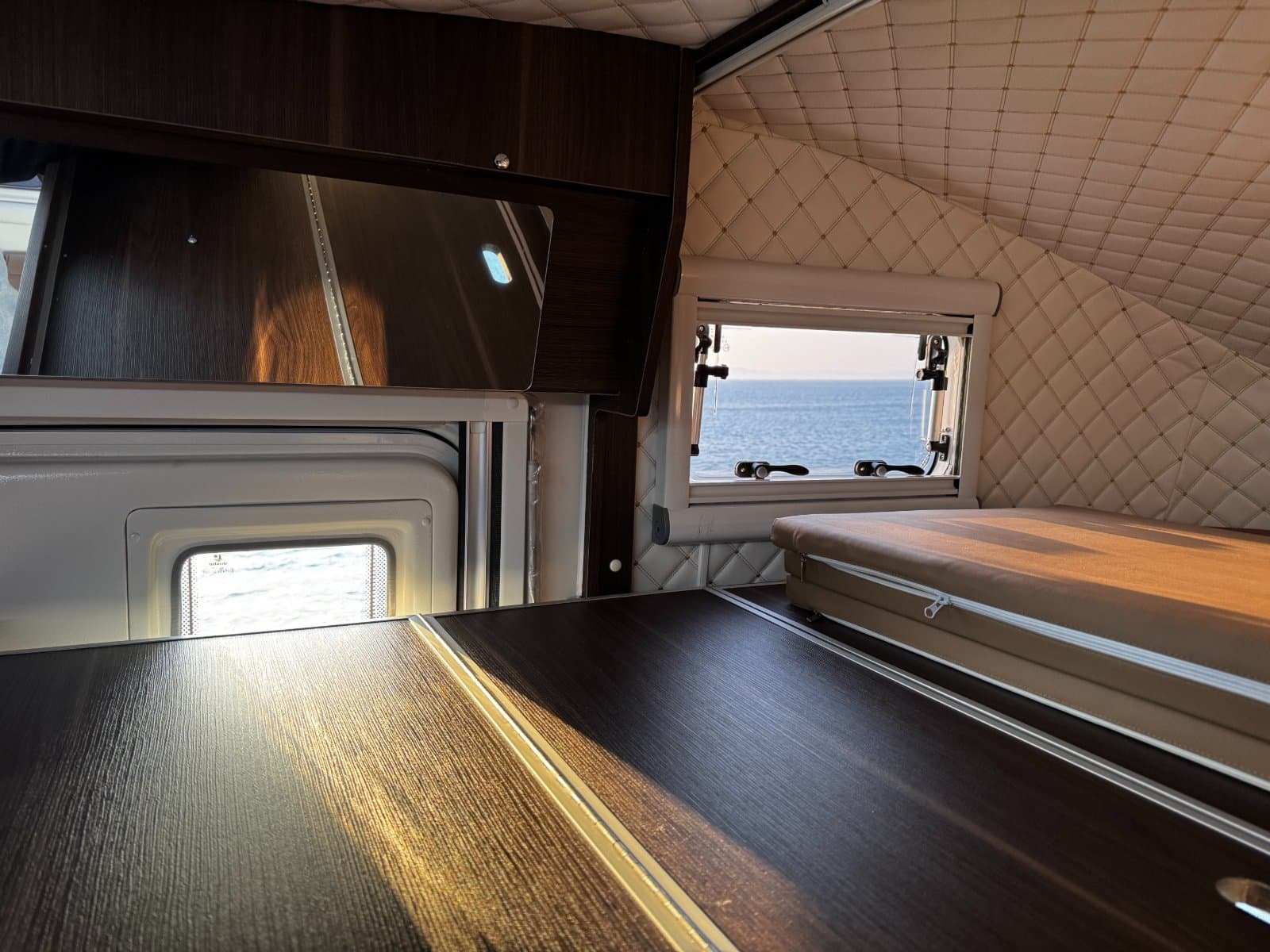
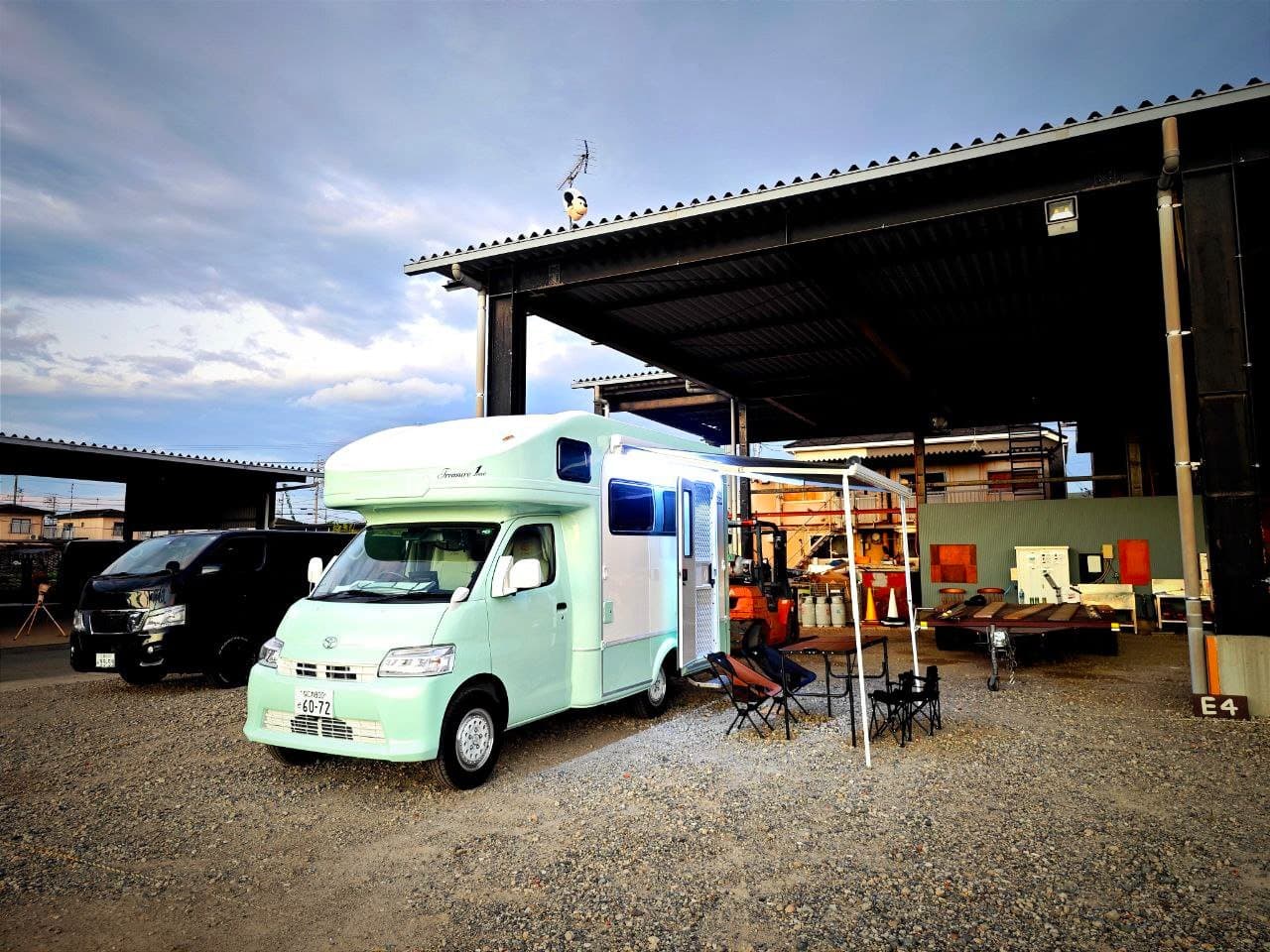
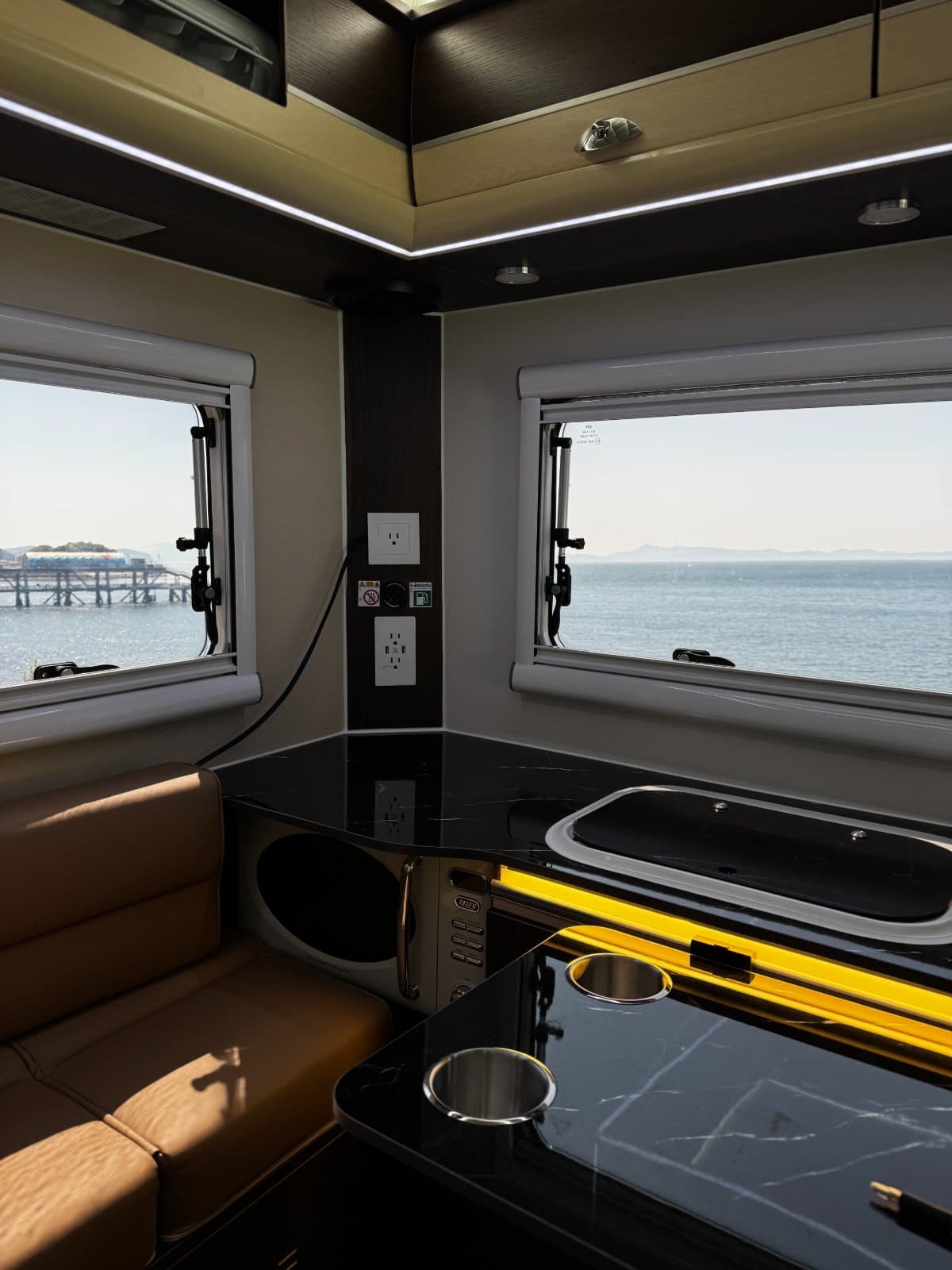
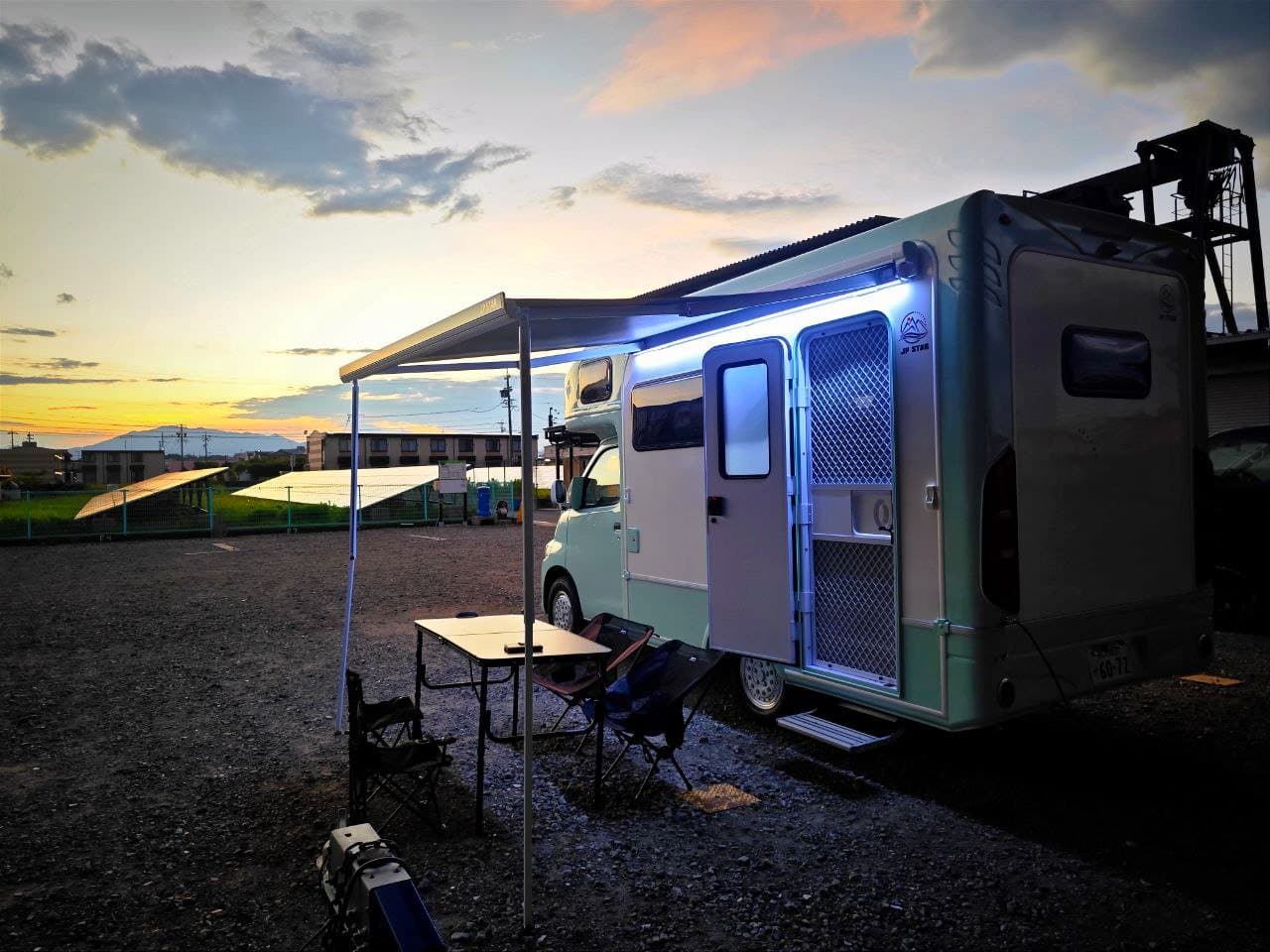
Campers for this trip
FAQ
Is Dreamax Connect free?
Yes. The spot, route, ferry and toll road pages and the map tool are all free to use.
Do I need to install an app?
No. Dreamax Connect is a web service: open it in the browser on your phone or computer. The map tool is at connect.dreamax.co.jp/map.
Does it cover all of Japan?
The overnight stops, ferry routes and scenic toll roads cover the whole country: the spot list is organised by region, starting from Hokkaido, and the ferry section includes island routes, 58 routes in all. The campervan routes are centred on Osaka: 31 of the 53 start there. As of September 2026 there are 566 overnight stops in Kansai.
How often is the data updated?
Continuously, rather than in one big refresh. The map data is republished every 15 minutes, and fare tables and seasonal datasets (autumn-leaves forecasts, winter closures, ski-area operating dates) are versioned and reviewed monthly. Every fact shows the date it was retrieved, so you can always see how current it is.
Can I use it without renting a campervan?
Yes. Travellers in their own car or in a rental from another company can use it in exactly the same way, for free. Toll road fares vary by vehicle class, so check the fare for your own vehicle’s class.
Related guides
Looking for more? All car-camping spots in Japan · Driving route library
Planned it with the data? Now drive it in a campervan.
Browse camper vans